In the province of Burgos, potato farming has suffered a sharp decline, with the area dedicated to this once-thriving crop dropping by 31% over the past decade. As of 2024, only 1,677 hectares of potatoes are cultivated in Burgos, compared to 2,438 hectares in 2014. This trend reflects a larger regional issue, with potato farming across Castilla y León facing similar challenges.
According to Daniel Bravo, the head of the potato sector at Asaja, the factors contributing to this decline are multifaceted. “It requires significant investment and a lot of labor,” Bravo explains, pointing to high production costs, labor shortages, and a lack of generational renewal as critical issues. These problems are exacerbated by weather-related delays and rising input costs, including seeds and treatments.
A Labor-Intensive Crop with High Costs
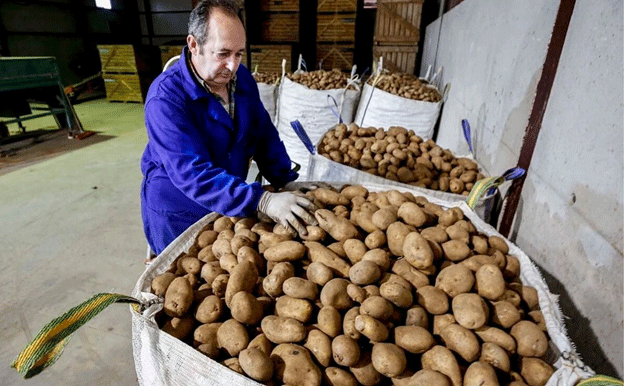
Potato farming, unlike cereal or sunflower cultivation, requires extensive manual labor. Farmers must manage planting, sorting, packing, and transporting the crop, which drives up production costs. Additionally, recent restrictions on using certain pesticides and fertilizers have forced farmers to turn to more expensive alternatives, further reducing profit margins. Bravo emphasizes the high costs: “You need to invest a lot of money per hectare, and it’s becoming harder to cover expenses.”
The Santa Isabel cooperative, which Bravo is a part of, exemplifies this struggle. Once a robust farming group, it now consists of only four farmers, barely breaking even. In an effort to stay afloat, Santa Isabel had to join forces with other cooperatives—Cosidel and Culpaval—to market their potatoes, as each cooperative specializes in different varieties.
Decline in Planted Area
The downward trend in potato farming is not limited to Burgos. Across Castilla y León, the total potato-planted area fell from 20,699 hectares in 2014 to 17,290 hectares in 2024. Despite this overall decline, some provinces like Valladolid and Salamanca remain leaders in potato farming, with over 4,700 hectares each.
Potato producers in Burgos are aging, and younger generations show little interest in taking up the labor-intensive work of potato farming. “We are getting older, and the number of hectares keeps dropping. It’s a lot of problems chained together,” Bravo laments. Without young farmers stepping in, the future of potato farming in the province looks bleak.
Quality Remains High, but Uncertainty Looms
Despite the challenges, the quality of Burgos potatoes remains high. The current harvest, although delayed due to heavy rains in September, is expected to be of good quality, though not as spectacular as the previous year’s bumper crop. In the Valle de Valdelucio and El Tozo, the primary potato-growing regions of Burgos, farmers are waiting for the weather to improve before they can begin harvesting. Delays risk exposing the crops to cold weather, which could jeopardize the yield.
The market, however, remains volatile. Potato prices in Burgos have fluctuated dramatically in recent weeks, ranging from 58 cents per kilogram two weeks ago to around 26-30 cents currently. The unpredictability of prices complicates financial planning for farmers, adding another layer of risk to an already precarious industry.
Potato farming in Burgos is in crisis. The sector faces significant challenges, from labor shortages and high production costs to an aging farming population. While the quality of the potatoes remains high, the long-term sustainability of the industry is in doubt. Without significant intervention and investment, the decline in planted areas may continue, threatening the livelihood of farmers and the future of potato production in the region.