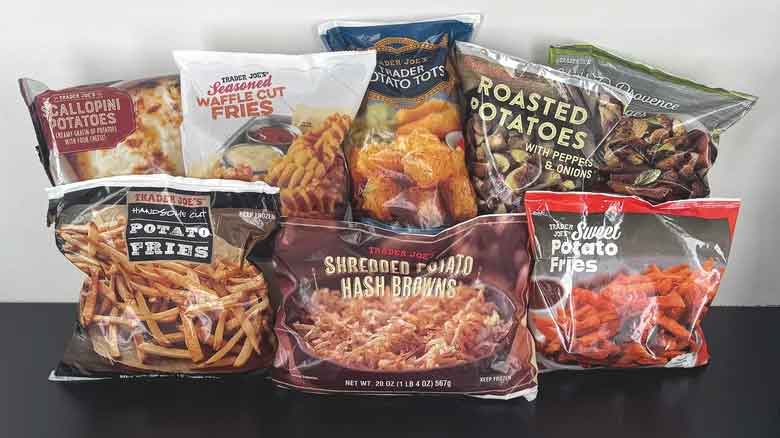
Consumer sensory evaluation of Trader Joe’s frozen potato lineup demonstrates that product success correlates strongly with texture optimization and seasoning balance. The top-ranked Sweet Potato Fries achieved a “10/10” texture score with crispy exterior and soft interior, reflecting what industry experts identify as critical quality parameters [consumer review data]. This aligns with market projections showing the global packaged sweet potato fries sector valued at $1.46 billion in 2025, growing at 5.2% CAGR to reach $2.3 billion by 2034, driven by air-fryer optimization and clean-label coatings . The second-ranked Seasoned Waffle Cut Fries succeeded through “pepper kick on the front end with lingering heat on the back,” demonstrating effective seasoning adhesion and heat management during processing.
The ranking reveals distinct performance tiers based on processing approach. Mid-tier products like the Scallopini Potatoes (gratin-style with four cheeses) and Handsome Cut Potato Fries delivered “balanced and delicious” results with minimal intervention, representing what market analysts categorize as value-added frozen specialties within the broader frozen potatoes segment that generated $18.2 billion in 2025 . However, lower-ranked items exposed formulation challenges: the Roasted Potatoes with Peppers & Onions suffered from “super dry and chewy” texture with rosemary dominating the profile, while the Trader Potato Tots exhibited an off-putting oil aftertaste despite good texture. These issues reflect processing complexities documented by equipment manufacturers, who note that coating systems must balance moisture management, oil absorption, and seasoning distribution to maintain quality through freezing and reheating cycles .
The hash browns placement (7th) illustrates an important strategic consideration: products positioned as “blank slates” for customization serve distinct market segments. While ranked low for out-of-package taste, these “killer base” products appeal to consumers seeking customization—a trend noted in market research where retailers benefit from “high-margin frozen innovations” and private-label premium tiers . The first-place finish of sweet potato fries over conventional white potato products signals shifting consumer preferences documented in industry forecasts, where the sweet potato fries segment shows strong growth momentum within the broader $8.08 billion frozen fries market projected through 2030 .
Trader Joe’s frozen potato portfolio demonstrates that market success depends on precise texture engineering, balanced seasoning systems, and alignment with consumer preparation trends. The superior performance of sweet potato fries validates significant market investment in this category, while the struggles of heavily seasoned products highlight the technical challenges of maintaining flavor balance through freezing and reheating. For product developers, the ranking underscores the importance of optimizing coating systems, managing oil absorption, and designing for air-fryer preparation—the preparation method that “definitely took the cake” across all tested items. As processing technology continues advancing with innovations in energy recovery, AI-driven automation, and low-total-cost-of-ownership design , manufacturers can better address the texture and flavor consistency demands revealed in consumer taste tests.