Pathogen. The blackleg bacterium is primarily seed- borne. Contaminated handling equipment such as seed cutters and picker planters contribute to the spread of the bacterium to healthy seed tubers. Wind-blown rain may be a source of inoculum.
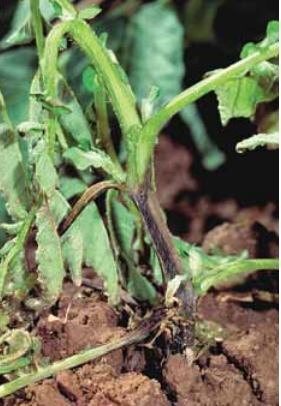
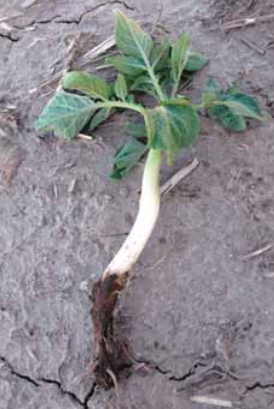
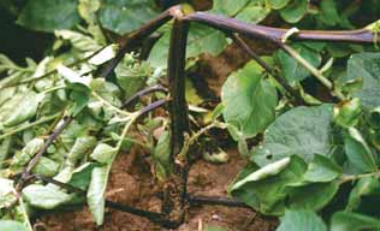
Disease development. If the spring is wet and cool, infected seed and sprouts usually rot before or early after emergence, resulting in uneven stands. If spring weather favours rapid emergence, infected seed will produce weak plants with stems showing an inky black decay extending up from the infected seed piece.
During the season, bacteria from decaying seed pieces and stems are spread by water in the soil and contami- nate new tubers. Wind-blown rain spreads the bacteria to healthy plants.
The disease can spread in storage, particularly after wet harvests. Some varieties, such as Monona and Chieftain, are very susceptible to blackleg.
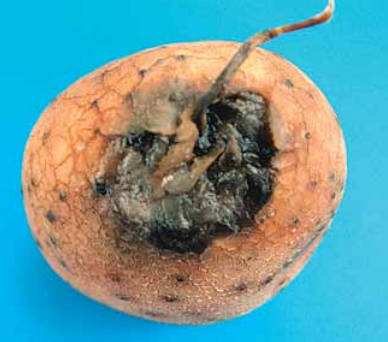
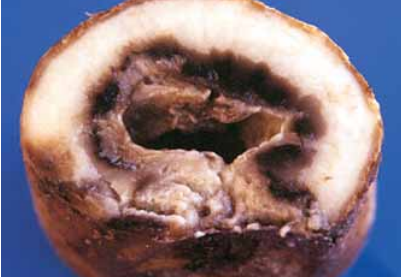
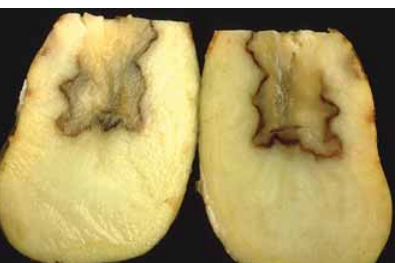
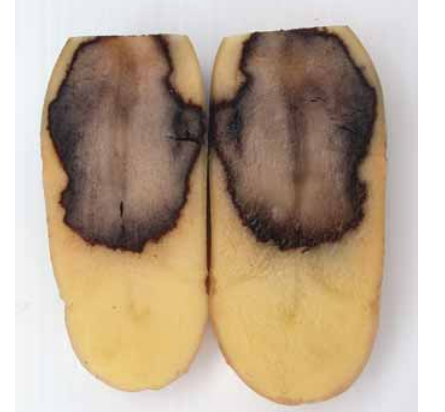
Symptoms. Blackleg symptoms may develop at any time during the season. New tubers infected from the mother plant have lesions that start at the stem end.
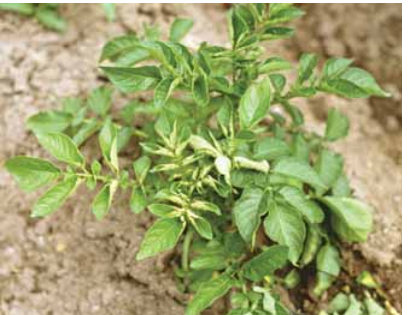
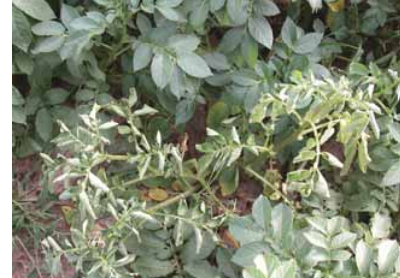
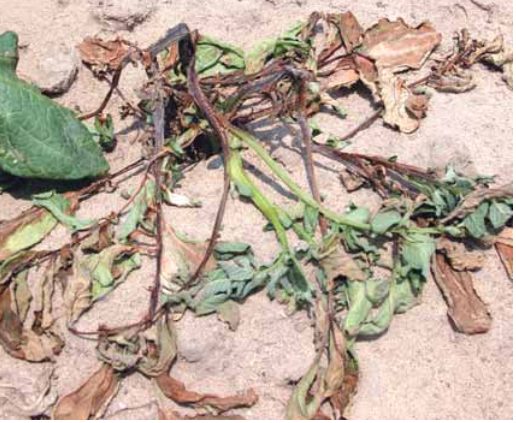
Stem end lesions are sunken, circular and black.Soft rot develops in the pith, extending into the tuber from the stem end.The infected flesh first appears cream-coloured.With time, the rot turns darker. In an advanced stage, the infected tissue turns greyish-black and mushy.Stems show an inky-black decay that starts from the seed. The decay extends a variable distance up the stem, anywhere from a few centimetres to the top of the stem.Infected plant with the rot extending from the seed piece up the stem. Often, infected tissue is invaded by secondary bacteria that produce a fishy odour.Infected plants are stunted and look stiff and erect, especially early in the season. The foliage becomes chlorotic, and leaflets tend to roll upward at the margins.Older plant with leaves rolled upward due to blackleg infection.Severe blackleg has caused the stem to break. In wet weather, the decay is soft and slimy. Under dry conditions, infected tissues may become dry and shriveled.Older plant wilted and dying as a result of blackleg.