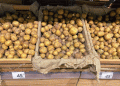
The recent announcement by fast-casual giant CAVA that it is reintroducing white sweet potatoes as a star ingredient in its largest-ever menu launch is a powerful case study in consumer-driven agricultural production. This move is not an isolated incident but part of a broader trend. According to a 2024 report from the United Sweet Potato Council, demand for specialty sweet potato varieties, including white-fleshed types, has grown by over 15% annually in the food service sector over the past three years. This is fueled by culinary trends toward global (in this case, Mediterranean) flavors, visually distinct plate presentation, and a perception of “heirloom” or “authentic” ingredients. CAVA’s experience is telling: after a successful seasonal test in 2021, customer demand on social media platforms was so fervent that it justified a permanent, high-profile return, positioning the vegetable as a premium component in high-protein, vegetable-forward bowls.
From an agronomic and supply chain perspective, white sweet potatoes offer both opportunities and challenges for producers. Varieties like the ‘O’Henry’, ‘Japanese Sweet Potato’ (Satsumaimo), or ‘White Triumph’ often have a drier, starchier texture and a subtly nutty flavor compared to the ubiquitous orange-fleshed ‘Beauregard’. They can command a price premium of 20-30% in wholesale markets, as noted in USDA Specialty Crop Market News. However, their cultivation requires specific varietal selection and post-harvest handling protocols to maintain quality and skin color. Crucially, CAVA’s model highlights the importance of a consistent, restaurant-quality supply. For a farm to become a supplier to a national chain, it must guarantee volume, size consistency, and year-round availability through staggered plantings and advanced storage—a significant logistical undertaking that favors larger, specialized operations or well-coordinated grower cooperatives.
The resurgence of white sweet potatoes in major food service channels is a clear signal to producers to diversify beyond commodity orange varieties. Success in this niche market hinges on three factors: 1) Strategic Partnerships: Aligning with buyers (processors, distributors, or directly with restaurant groups) who value and market the unique attributes of the crop. 2) Quality-Focused Production: Investing in the specific agronomic knowledge and post-harvest infrastructure needed to deliver a superior, consistent product that meets strict food-service specifications. 3) Market Agility: Recognizing that consumer trends, amplified by social media, can rapidly create and sustain demand for specialty produce. For farmers and agricultural scientists, this represents a tangible opportunity to increase per-acre revenue by meeting the evolving demands of a dynamic food industry that increasingly prizes differentiation, flavor, and story.
Keywords: white sweet potatoes, specialty crops, market demand, food service supply chain, value-added agriculture, consumer trends, crop diversification, agronomic management, post-harvest quality, Mediterranean cuisine.