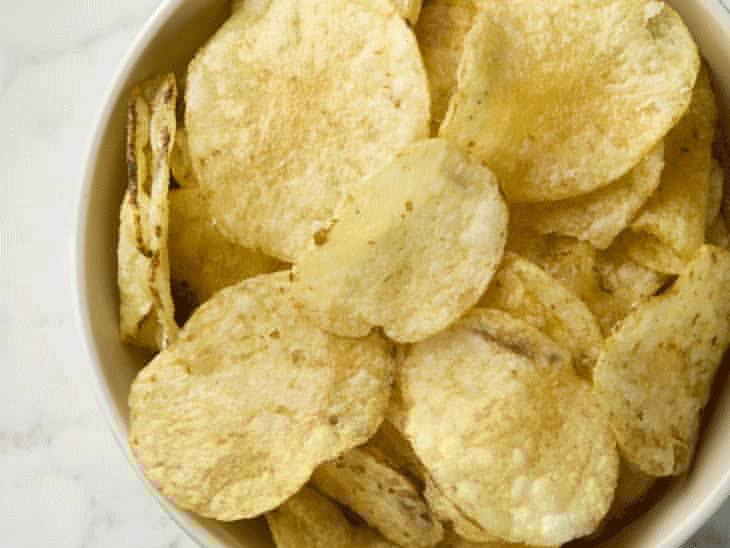
The explosive popularity of specialized snacks like Calbee’s Honey Butter Chips is not a random food fad; it is a clear market indicator with significant implications for the agricultural supply chain. These chips, which command a premium price of approximately $28.99 for a six-pack of 2.8oz bags (roughly $1.73 per ounce), thrive on a specific quality proposition. The consumer review highlights the critical importance of a “savory, slightly earthy taste of the potato itself” shining through a complex seasoning. This underscores a non-negotiable demand for potatoes with excellent inherent flavor, consistent solids content, and ideal frying qualities that can serve as a neutral yet high-quality canvas for premium flavor systems.
This trend aligns with broader data on consumer behavior. According to a 2023 report from Innova Market Insights, “Plant-Based: The Canvas for Innovation” is a top trend, with consumers seeking authentic, high-quality base ingredients. Furthermore, the success of flavors leveraging “umami” ingredients like yeast extract (a key note in this seasoning) points to a growing demand for sophisticated, savory profiles. For growers, this translates to a strategic shift. The market is segmenting further into commodity versus value-added potatoes. Supplying for a premium snack line requires close collaboration with processors on specific varietal selection, precise storage protocols to maintain sugar levels and prevent defects, and rigorous quality control to ensure every chip delivers the promised texture and flavor. The agility of brands like Calbee to launch and scale such products also suggests that contract growers may benefit from more flexible, collaborative partnerships focused on innovation rather than just bulk yield.
The lesson from Calbee’s Honey Butter Chips is unequivocal: the highest value in the potato market is increasingly found at the intersection of agronomic excellence and consumer flavor trends. For farmers and agricultural scientists, this means moving beyond yield-centric metrics to embrace traits vital for the end product: flavor consistency, processing performance, and the ability to carry sophisticated seasonings. By understanding the end-consumer’s palate and partnering proactively with processors developing the next viral snack, progressive growers can secure more profitable, sustainable contracts. The future belongs not just to those who grow the most potatoes, but to those who grow the right potatoes for a demanding and evolving market.