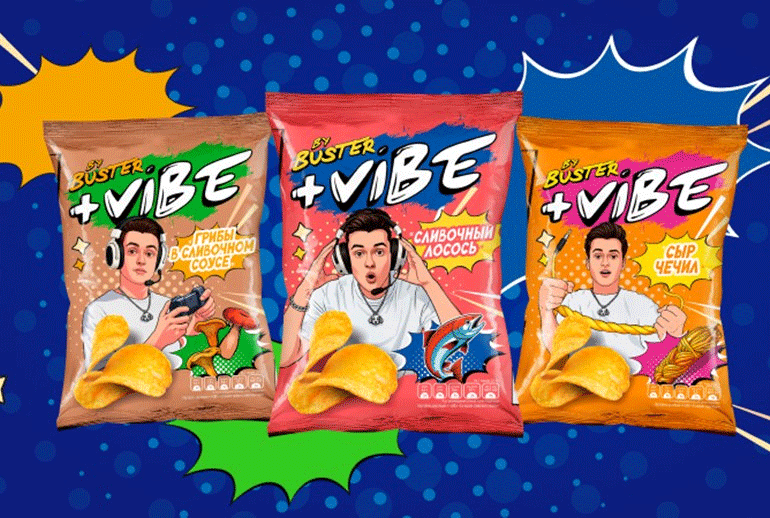
The recent launch of the “+Vibe by Buster” chip line by the brand “Moscow Potato” might seem like a simple marketing story from the consumer packaged goods (CPG) sector. However, for professionals across the agricultural spectrum—from growers to scientists—it signals a profound evolution in the potato value chain. This collaboration with streamer Slava Buster to create flavors like “Chechil Cheese,” “Mushrooms in Cream Sauce,” and “Creamy Salmon” is not merely a novelty. It represents a strategic pivot towards hyper-targeted product development, driven by direct consumer data and digital subcultures. For the primary producer, the question is no longer just yield per hectare, but also: what attributes does the next generation of consumers value, and how can farming practices adapt to meet the quality specifications of these niche, value-added products?
This trend aligns with global data on agricultural value addition. According to a 2024 report by the FAO on Agri-food Systems Transformation, the future of competitive farming lies in integrating into chains that respond to specific consumer segments—be it through health, ethics, or, as seen here, cultural resonance. The company explicitly stated this launch is a “strategic step” to attract Generation Z, a demographic that influences over $360 billion in annual spending in the US alone (Forbes, 2023), with similar trends globally. For agronomists and agricultural engineers, this underscores the increasing importance of producing not just commodity potatoes, but raw material with consistent quality, specific dry matter content, sugar levels, and tuber size ideal for processing into premium snacks. It reinforces the need for precision agriculture, tailored storage protocols, and varietal selection geared towards processing traits that can support higher-margin end products.
Furthermore, the direct-to-consumer (D2C) model implied by this streamer collaboration—using audience preferences to dictate flavor R&D—shortens the feedback loop between farm and fork. Scientists working in agriculture must consider that research priorities may increasingly be influenced by these downstream signals. Breeding programs might need to focus more on nutritional profile enhancement or disease resistance for varieties destined for such processed segments, while farm owners must evaluate contracts and partnerships with processors who are actively engaged in this type of market innovation.
The “+Vibe” chip launch is a case study in modern agri-food dynamics. It demonstrates that value creation is migrating from bulk commodity production to tailored, consumer-centric innovation. For farmers and agricultural professionals, staying competitive will require greater awareness of downstream market trends, fostering adaptability in production systems, and potentially engaging in more collaborative relationships with processors who are navigating the digital consumer landscape. The farm’s success is increasingly linked to the final product’s success on the supermarket shelf—and now, in the world of online streaming.