#PestControl #Agriculture #CropDamage #CulturalPractices #BiologicalControl #FleaBeetles #AlticaSpp
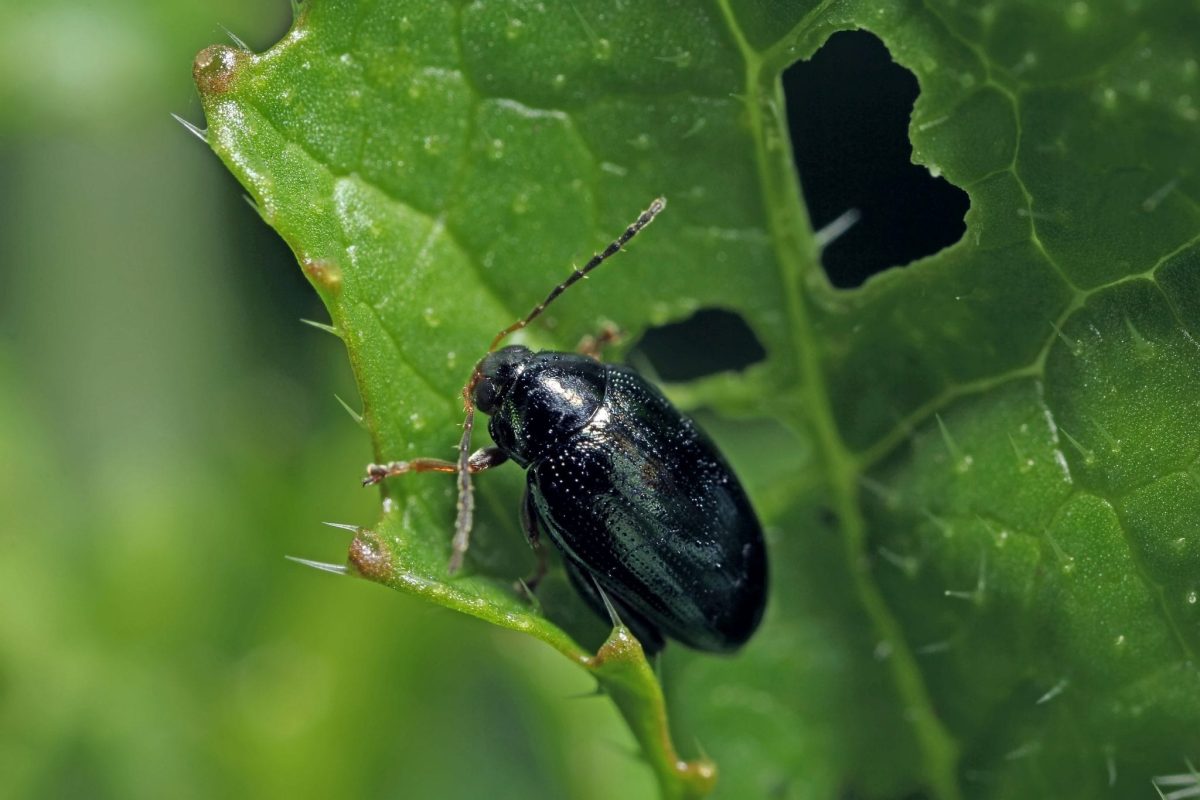
Flea beetles, scientifically known as Altica spp., are a common pest that pose a significant threat to agricultural crops. These tiny insects, which are typically only a few millimeters long, can cause significant damage to plant leaves and roots, leading to reduced crop yields and economic losses for farmers. In this article, we will explore the development and consequences of the flea beetle threat to agriculture.
Flea beetles are found in almost all agricultural regions worldwide, and their feeding behavior is particularly damaging to crops such as potatoes, tomatoes, eggplants, and cruciferous vegetables like cabbage and broccoli. The adult beetles feed on the leaves and stems of these plants, while the larvae feed on the roots, causing significant damage to the plant’s ability to grow and produce.
One of the main challenges in controlling flea beetles is their high reproductive capacity. Females can lay up to 400 eggs, which can hatch and develop into adults within a few weeks, leading to rapid population growth. This makes it challenging to control the spread of flea beetles and prevent crop damage.
Farmers use various methods to control flea beetle populations, including chemical pesticides, cultural practices, and biological control agents. Chemical pesticides are effective but can have negative impacts on the environment and non-target organisms. Cultural practices such as crop rotation and intercropping can help reduce flea beetle populations by disrupting their habitat and limiting their food sources. Biological control agents, such as parasitic wasps and nematodes, can also be effective in reducing flea beetle populations.
In conclusion, flea beetles pose a significant threat to agricultural crops worldwide, and their high reproductive capacity and feeding behavior make them difficult to control. The development and implementation of sustainable and effective control strategies, such as cultural practices and biological control agents, are critical in reducing the economic and environmental impacts of flea beetle infestations.