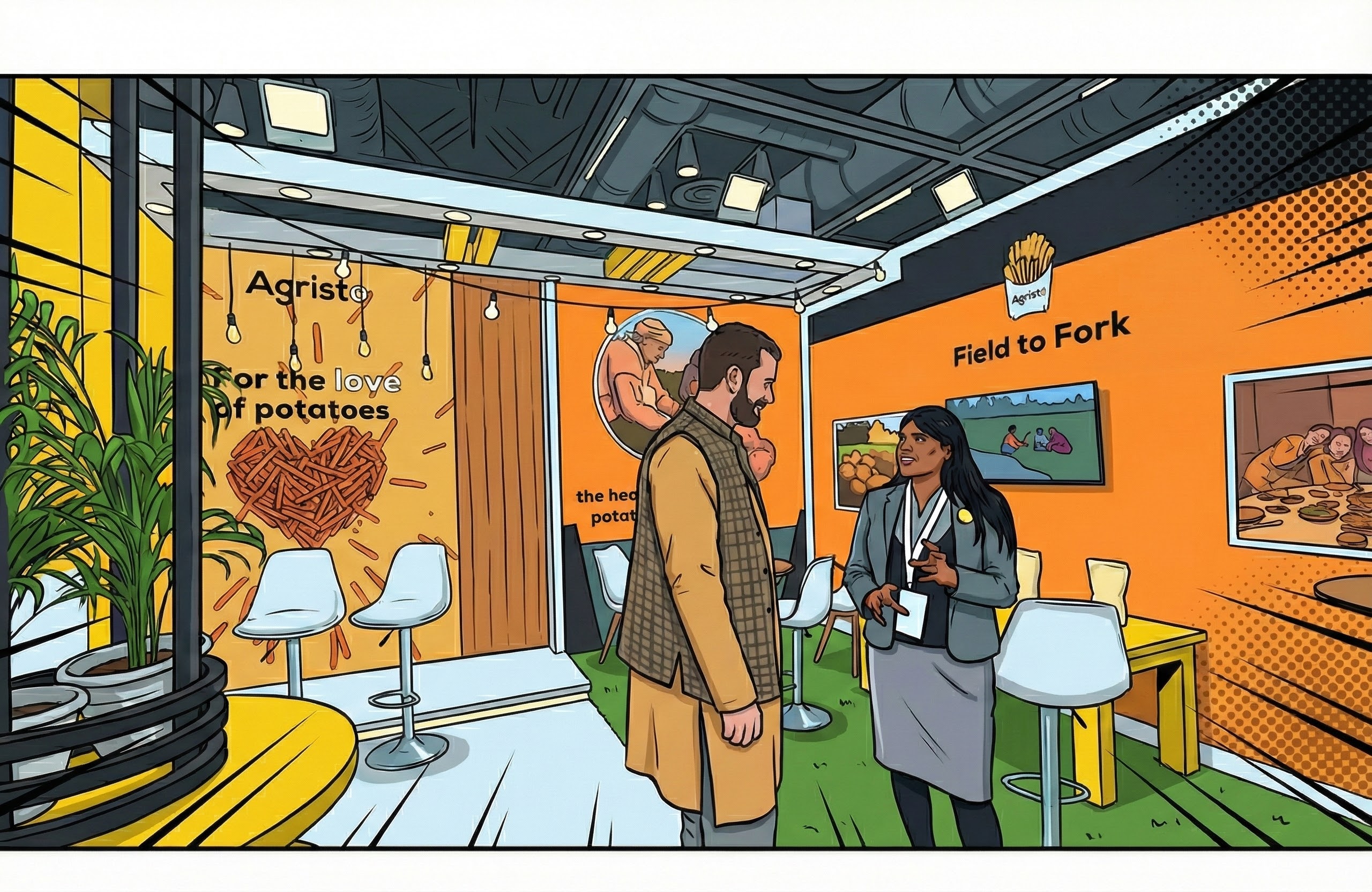
As part of the International Potato Tour (IPT), Viktor Kovalev recorded an interview with Rajni Gupta, Country Head – Agristo India, during Potato Summit in Delhi (Day 2). The conversation is practical and forward-looking: why Agristo started in Uttar Pradesh, how guided farming supports growers from seed to storage, and how the company is expanding processing capacity—the flakes line is already running, and in 2026 Agristo plans to launch its fries line for global markets.
Agristo entered India in 1996 — with a long-term mindset
Rajni Gupta notes that Agristo has been in India since 1996. A key theme is the company’s long-term approach: bringing global experience into local realities and scaling step by step, using strong operating standards and consistent quality.
Why Uttar Pradesh (not Gujarat): the “potato belt” logic
One of the key points in the interview is Agristo’s strategic choice of where to begin. Rajni explains that Agristo looked at India through a potato belt perspective—concentration of production, scalability, and the ability to build a reliable raw-material base. In that logic, Uttar Pradesh was the most natural starting point for building a structured supply and support system.
The challenges of traditional farming: soil, crop protection, nutrition, and cold storage
Rajni highlights what often limits performance and profitability in traditional potato farming:
- Soil safety and soil health (long-term stability of yields),
- Crop protection (timing, purpose, and integrated decisions—not just products),
- Fertilizer and nutrition management (balance and predictability),
- Cold storage discipline (maintaining quality and reducing losses).
These factors directly impact yield, raw-material quality, and farmers’ income—especially when processing requirements are involved.
Guided farming: end-to-end support “from the very start”
Rajni describes guided farming as a full-cycle partnership with growers, including:
- seed selection and early-stage planning,
- cultivation and agronomy guidance,
- support on crop protection and nutrition,
- harvest and quality requirements,
- storage logic and delivery readiness.
The goal is not just to buy potatoes, but to co-manage outcomes—improving yields, stabilizing quality, and ultimately raising farmer profitability.
Processing growth: flakes are running; 2026 — fries line (“golden fries”) for global markets
A strong news point: Rajni confirms that Agristo’s flakes line is already running, and the next major step is the launch of a fries line in 2026. The focus is not only domestic demand—Agristo is preparing output and quality systems aligned with global market expectations.
Farmer network expansion: targeting ~300 growers in 3–4 years
Agristo plans to expand procurement and its farmer ecosystem. In the interview, Rajni shares a target of around 300 farmers over the next 3–4 years, supported by the guided farming model and consistent standards.
Five pillars of Agristo’s strategy
Rajni summarizes Agristo’s “mantra” as five core pillars:
- Operational excellence
- Innovation
- Quality
- Sustainability
- People