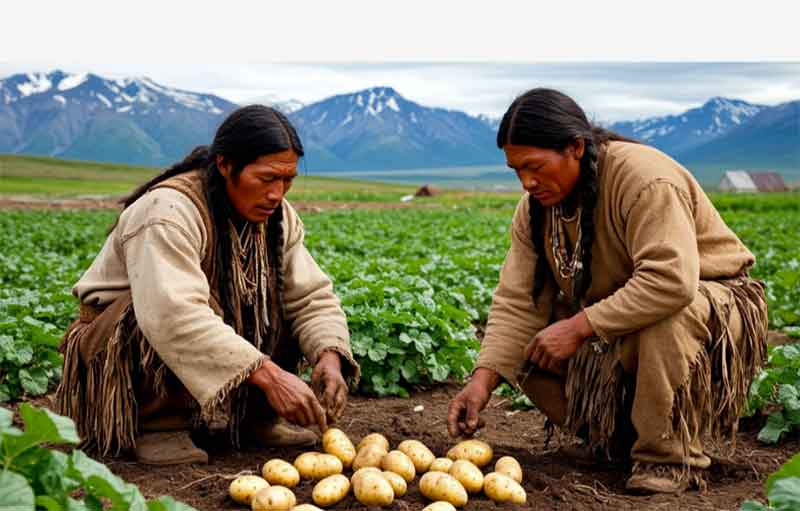
A seminal study published in PLOS One has fundamentally altered the timeline of agriculture in North America. By analyzing microscopic starch grains preserved on 401 stone tools from 14 archaeological sites in the Four Corners region, researchers have uncovered evidence that Indigenous communities were systematically cultivating and using the native Four Corners potato (Solanum jamesii) approximately 10,000 years ago. This predates the introduction of Mesoamerican staples like maize and squash to the region by several millennia, challenging the long-held view that early Southwestern agriculture was entirely dependent on imported crops. The consistent presence of potato starch at key sites over thousands of years points not to casual foraging, but to deliberate cultivation and care, suggesting a form of early domestication.
This research aligns with a growing global appreciation for crop wild relatives (CWRs) and indigenous domestication pathways. Solanum jamesii is not the modern domesticated potato (S. tuberosum), which originated in the Andes, but a distinct, nutritious species. As noted in the study, these ancient tubers were higher in protein, calories, and fiber than many modern varieties. The populations found near ancient settlements show human-selected traits such as enhanced frost tolerance and unique germination—a precursor to full domestication. This mirrors contemporary efforts to tap into the genetic reservoir of CWRs to bolster modern crops against climate change, pests, and diseases. For instance, the Crop Trust emphasizes that wild relatives hold crucial genes for resilience, much like those observed in the ancient S. jamesii lines. Furthermore, the study underscores the sophistication of traditional ecological knowledge, with cultivation and storage practices passed down through generations, primarily among women of the Diné and Hopi nations.
The discovery of 10,000-year-old potato cultivation is more than an archaeological milestone; it is a powerful reminder for the agricultural community. It demonstrates that domestication and agricultural innovation are deeply rooted, continuous processes shaped by human selection and deep environmental knowledge. For modern farmers, agronomists, and scientists, this underscores two critical imperatives. First, it highlights the immense, untapped value of crop wild relatives and landrace varieties as genetic reservoirs for breeding more resilient, nutritious, and sustainable crops. Second, it validates the importance of preserving and integrating traditional agricultural knowledge with modern science. Looking forward, respecting and learning from these ancient legacies may be key to developing the robust, climate-adaptive agricultural systems our future demands.