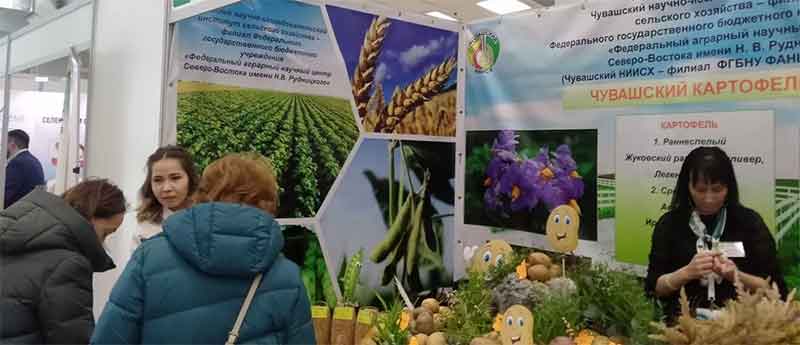
Chuvashia Hosts “Potato-2026”: A Critical Gathering for Russia’s Seed Independence and Agricultural Technology
For agricultural professionals navigating Russia’s evolving potato sector, the XVIII Interregional Exhibition “Potato-2026” in Cheboksary represents a vital convergence of industry innovation and practical supply chain solutions. Scheduled for March 4-5 at the MTV-Center, the event will bring together approximately 80 companies from 17 Russian regions, showcasing advances in breeding, seed production, cultivation technology, storage systems, and processing equipment [citation:0]. This gathering occurs against a backdrop of significant policy shifts: Russia has reduced seed potato import quotas from unfriendly countries to 10,000 tonnes for 2026, down from 12,000 tonnes in 2025, following a dramatic 93.1% year-on-year decline in imports during 2024 . Concurrently, federal targets aim for 75% domestic seed use by 2030, with current potato seed self-sufficiency requiring urgent attention to variety development and multiplication capacity .
Beyond the exhibition of crop protection products and agricultural machinery, the event addresses immediate practical needs through its traditional seed potato sales—this year offering 55 tonnes of planting material directly to growers [citation:0]. This direct-to-grower distribution channel gains heightened significance given recent research advancements, including marker-assisted selection protocols validated for Ural breeding programs targeting resistance to potato wart (Synchytrium endobioticum), cyst nematodes (Globodera spp.), and late blight (Phytophthora infestans) . Meanwhile, major industry players like Miratorg are simultaneously presenting proprietary varieties such as the red-skinned “Klad” at concurrent Moscow exhibitions, signaling accelerating domestic breeding capacity . For farm owners and agronomists, the Cheboksary exhibition offers not only access to 55 tonnes of quality seed stock but also critical exposure to the technological and genetic tools needed to navigate an era of restricted imports and ambitious national self-sufficiency goals.