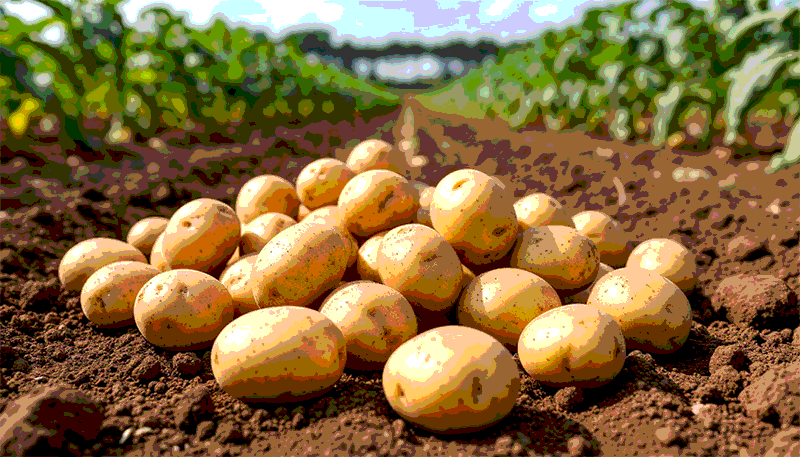
In an era where food security and regional self-sufficiency are paramount, the success story of Novgorod Oblast in 2025 offers a compelling blueprint. The region has clinched the top position in the Northwestern Federal District for the gross production of potatoes and vegetables. This achievement was not accidental but the direct result of a well-funded and strategically deployed agricultural policy, with a total subsidy package of 482 million rubles (approx. $5.2 million USD) channeled into the regional agro-industrial complex.
The cornerstone of this success was a sharp focus on crop specialization. Under the federal project “Development of Vegetable and Potato Growing Industries,” over 41 million rubles were allocated directly to producers. This targeted investment in both open-field and greenhouse vegetables, as well as perennial plantations, provided the capital for scaling and modernizing core production. As noted by Deputy Minister of Agriculture Vladimir Tatarenko, this support was instrumental in securing the regional lead. Beyond crop production, the policy demonstrated a holistic understanding of a resilient agricultural economy. Significant funds were directed to stimulate livestock farming (34.6 million rubles for milk production), dairy processing (19.6 million rubles), and pedigree breeding (16.6 million rubles). Crucially, recognizing smallholders as “drivers of rural development,” the authorities allocated 169.8 million rubles to support family farms, beginners via the “Agrostartap” grant (48 million rubles for 11 farmers), and agricultural co-operatives. This multi-pronged financial approach was paired with a massive 715.5 million ruble investment in rural infrastructure and living conditions, ensuring that economic growth translates into improved quality of life and helps retain a workforce in the countryside.
This model aligns with broader global trends emphasizing the role of “smart subsidies” in agricultural transformation. Research from organizations like the FAO and OECD consistently shows that targeted financial support, especially when coupled with investments in rural infrastructure and human capital, yields higher returns in productivity and sustainability than broad, untargeted aid. Novgorod’s approach of supporting both large-scale strategic crop production and small entrepreneurial farms mirrors successful diversification strategies seen in other regions aiming for food sovereignty.
The Novgorod case study demonstrates that achieving leading agricultural productivity is a function of deliberate, well-structured state investment. By simultaneously funding priority crop sectors, strengthening related value chains like livestock and processing, empowering small and beginning farmers, and tangibly improving the rural environment, the region has created a synergistic model for growth. For policymakers and agricultural leaders elsewhere, it underscores that competitiveness is built not by a single grant, but by a cohesive financial ecosystem that supports every link in the agricultural chain—from the field to the rural community.