

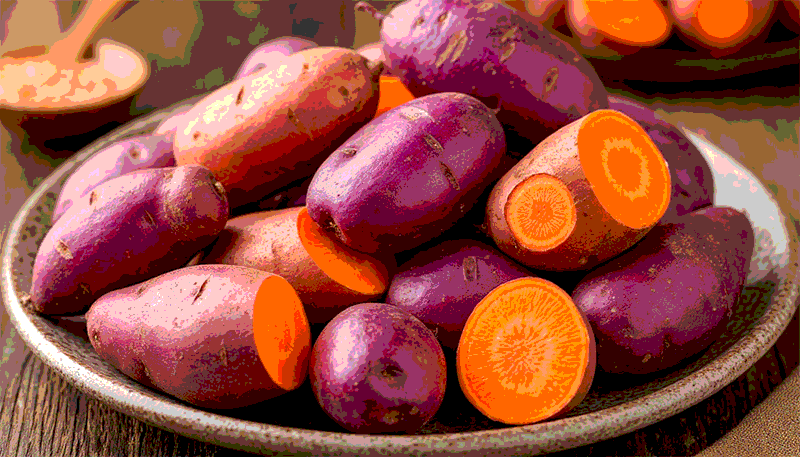
For farmers, agronomists, and agricultural scientists, the divergence between orange-fleshed sweet potatoes (OFSP) and purple-fleshed sweet potatoes (PFSP) represents a compelling case study in biofortification, functional food production, and crop selection strategy. The core difference is rooted in their pigment-based phytochemistry: OFSP is rich in beta-carotene (a provitamin A carotenoid), while PFSP accumulates anthocyanins, primarily cyanidin and peonidin derivatives. These are not merely colorants; they are bioactive compounds with significant nutritional and market implications.
Recent data solidifies their health value. The World Health Organization endorses OFSP as a critical tool in combating Vitamin A Deficiency (VAD), a leading cause of childhood blindness in developing regions. Just 125g of OFSP can provide the recommended daily allowance of vitamin A. Meanwhile, research on PFSP anthocyanins has advanced beyond basic antioxidant capacity. A 2022 review in Food Chemistry highlighted their demonstrated anti-inflammatory, hepatoprotective, and neuroprotective activities in vivo. More critically for modern dietary concerns, studies indicate that PFSP anthocyanins can significantly inhibit digestive enzymes (α-amylase and α-glucosidase), leading to a lower postprandial glycemic response compared to OFSP and white potatoes. This positions PFSP as a particularly valuable crop for functional foods targeting metabolic health.
From a production and market perspective, these biochemical differences dictate strategy. Agronomically, while yields vary by specific cultivar and environment, many PFSP varieties can exhibit slightly lower beta-carotene content but superior drought and disease tolerance in certain regions, as noted in research from the International Potato Center (CIP). For breeders, the goal is clear: developing high-yielding, climate-resilient varieties with intensified pigment profiles. For farmers and farm owners, the decision involves market analysis. OFSP aligns with public health initiatives and staple food markets. PFSP, with its striking color and “superfood” status, commands a premium in health-conscious, specialty, and processing markets (e.g., natural colorants for pasta, beverages, and baked goods). Its firmer texture and drier mouthfeel, as mentioned, also make it ideal for value-added products like colored fries or dehydrated snacks that require shape retention.
The question is not which variety is universally “better,” but which is more strategically aligned with specific agricultural and market objectives. Orange-fleshed sweet potatoes remain an indispensable, life-saving crop for nutritional security and mass markets. Purple-fleshed sweet potatoes represent a high-value opportunity, driven by advanced nutritional science linking their unique anthocyanins to tangible health benefits, particularly in managing oxidative stress and glycemic impact. A diversified approach, cultivating both based on soil suitability, climate resilience, and identified market channels, offers the most robust strategy for modern agricultural enterprises. The true value lies in understanding and communicating the distinct science behind the color to capture premium markets and contribute to differentiated public health outcomes.