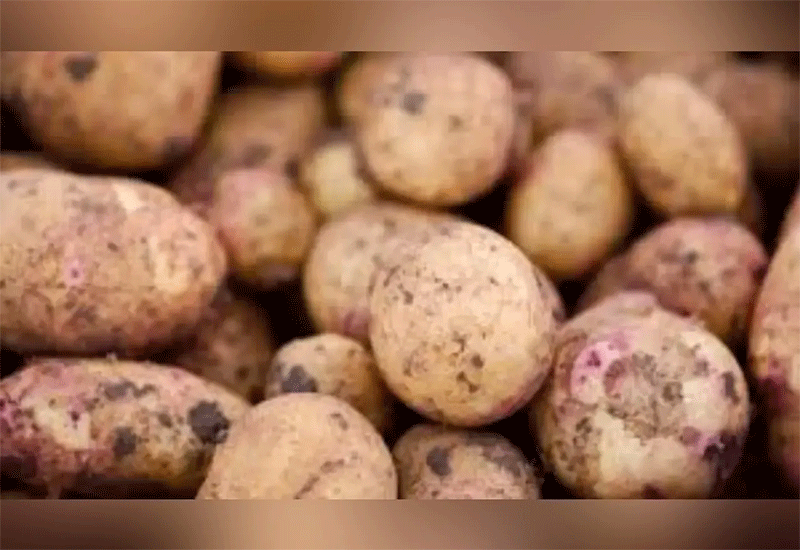
For market gardeners, niche producers, and avid home growers, the promise of harvesting fresh potatoes in July represents both a culinary luxury and a strategic agricultural opportunity. Success hinges on a dedicated protocol centered on variety selection and physiological preparation. The foundation is choosing true early (50-60 day) and ultra-early (45-55 day) varieties, such as Russia’s ‘Zhukovsky’, known for forming 10-15 tubers per plant and reaching marketable size in 45 days. The critical, non-negotiable step is pre-sprouting (chitting) seed tubers for 4-6 weeks pre-planting. This process breaks dormancy, ensuring rapid and uniform emergence, effectively giving the crop a substantial head start and compressing the growing cycle. According to research from the International Potato Center (CIP), pre-sprouting can advance harvest by 10-14 days and increase total yield in early varieties by up to 20%, as it shifts more of the growth period into favorable conditions.
Post-planting management for these early crops is uniquely focused. Soil should be loosened shortly after emergence to disrupt pests like wireworms and Colorado potato beetles, with vigilant scouting replacing calendar-based spray schedules. Irrigation is often minimal, relying on residual spring soil moisture unless severe drought occurs during tuber bulking. This efficient approach makes ultra-early potatoes an excellent candidate for sequential cropping, allowing the same land to be used for a follow-on crop of leafy greens or fall brassicas. The economic logic is powerful: A 2024 analysis in American Vegetable Grower highlighted that early-season potatoes can command premium prices at farmers’ markets and direct-to-consumer channels, often 200-300% above storage potato prices in mid-summer, offering exceptional revenue per hectare per day.
Cultivating ultra-early potatoes is a masterclass in precision timing and physiological management rather than sheer volume production. It demonstrates that significant value can be created by strategically filling a seasonal market gap with a meticulously prepared crop. For farmers, this system enhances land-use efficiency and opens premium revenue streams. For agronomists, it underscores the profound impact of pre-plant seed manipulation on crop pacing. By integrating the right genetics with disciplined chitting and targeted field care, growers can reliably turn a small parcel of land into a source of summer gold, proving that sometimes the greatest rewards in agriculture come not from the largest harvest, but from the earliest.