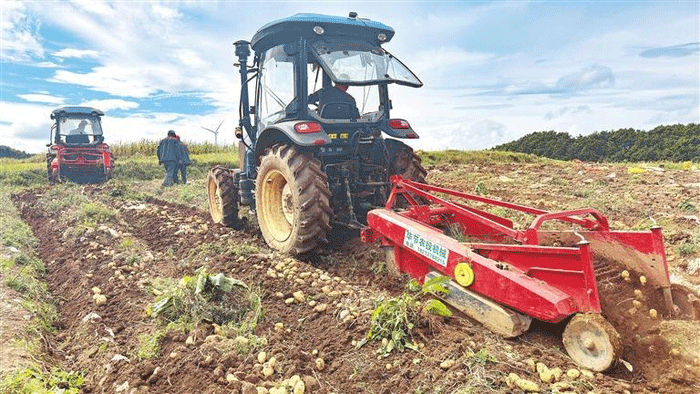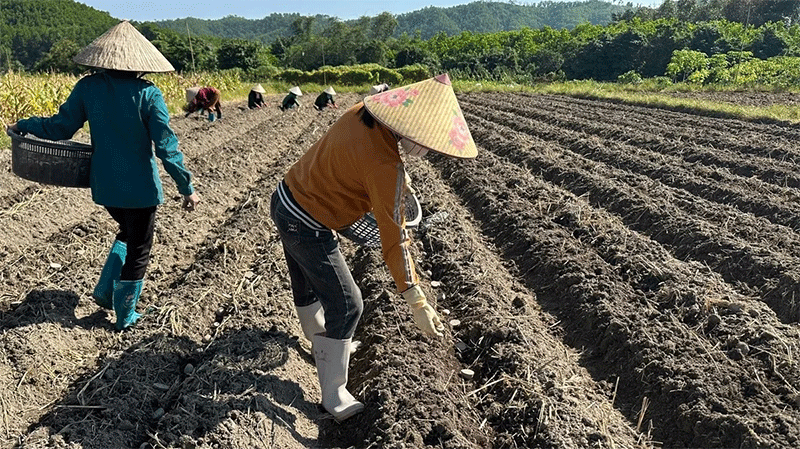
The decision by Quang Duc commune in Vietnam’s Quang Ninh province to distribute 15 tons of ‘Atlantic’ potato seed and 18 tons of organic fertilizer to 17 households for a 12-hectare winter crop pilot is a significant local intervention. With a planned total winter crop area of 300 hectares for 2025, this potato initiative represents a strategic push to diversify production and shift towards higher-value commercial agriculture. The choice of ‘Atlantic’ is deliberate; it is a globally recognized processing variety with high dry matter content, ideal for French fries and chips, indicating a target market beyond fresh consumption.
However, the true innovation of this project lies not in the subsidy itself, but in its holistic, three-pillar structure that directly addresses the most common failure points in smallholder agricultural development. First is the input pillar: providing certified seed of a market-demanded variety and organic amendments to ensure a strong start. The seeding rate of approximately 1.25 tons/ha aligns with standard practice for potato. Second is the knowledge pillar: compulsory technical training sessions on land preparation, planting, and crop management. This is crucial, as the success of a high-input crop like potato is intensely knowledge-dependent. Third, and most critically, is the market pillar: the commune has proactively linked farmers with an enterprise for a bao tiêu (off-take) agreement, guaranteeing purchase of the harvest. This model mirrors successful contract farming frameworks seen globally, which a 2023 IFAD report highlights as essential for de-risking production, ensuring quality consistency, and providing farmers with predictable income.
This integrated approach is a marked improvement over traditional subsidy programs that often end with input distribution. It creates a closed-loop system where support is conditional on participation in training and the contract, ensuring inputs are used effectively for a known market outcome. For ‘Atlantic’ potatoes, which require specific harvest timing and handling to maintain processing quality, this guided, market-linked production is not just beneficial—it is necessary. The program’s focus on a communal scale (multiple villages) also helps achieve the volume threshold required to attract and satisfy a commercial buyer, a lesson emphasized in collective marketing literature.
The Quang Duc commune model provides a compelling blueprint for effective local agricultural development. It successfully integrates the three non-negotiable components for transitioning smallholders to commercial horticulture: quality inputs, embedded agronomic extension, and secured market access. By focusing on a high-potential crop like processing potato and removing the primary barriers of seed cost, knowledge gaps, and market uncertainty, the program significantly increases the likelihood of farmer success and income growth. For policymakers and development practitioners, this case underscores that the most impactful subsidies are those that are part of a larger, market-smart system rather than standalone gifts. The ultimate test will be the yield, quality, and profitability achieved at harvest, but the foundational strategy is precisely correct.