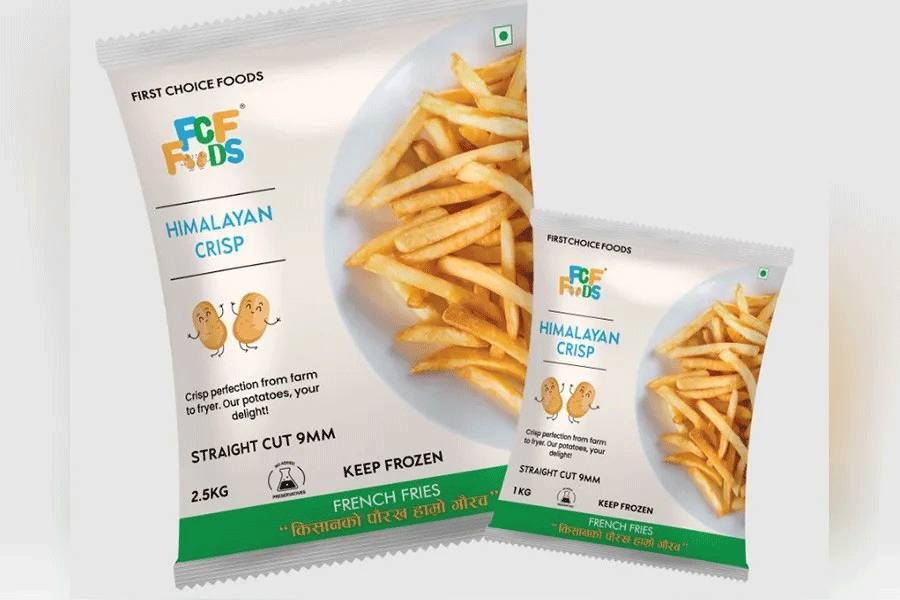
In a remarkable display of ambition and execution, First Choice Foods Ltd. of Nepal is demonstrating how strategic vision and deep farmer integration can catapult a nascent processing sector onto the world stage. Having commenced production only in mid-June 2025, the company achieved its first export to the United States within months and is now poised for a rapid, multi-continent expansion. Founder Krishna Prasad Paudel has announced targets to begin shipments to the United Kingdom by mid-December 2025, followed by Japan and Australia by mid-February 2026. This aggressive timeline underscores a new paradigm: with the right model, emerging agricultural economies can bypass years of gradual development to compete in the high-value global potato trade.
The company’s success is not solely a triumph of marketing; it is fundamentally built on transforming the agricultural base. To secure a consistent supply of quality raw product for its Himalayan Crisp brand, First Choice Foods has launched a comprehensive backward integration initiative. It is directly engaged with 35,000 farmers across 26 districts, providing essential training in modern potato cultivation, production methods, and machinery use. This scale of outreach is significant in a country where smallholder farming dominates. While specific Nepali potato production data is limited, this initiative directly addresses common constraints in emerging processing sectors: varietal inconsistency, post-harvest losses, and low yields. By investing in farmer capability, the company is building its own reliable supply chain—a lesson for processors everywhere. Concurrently, the firm is cultivating domestic premium channels, supplying five-star hotels and KFC outlets, which validates product quality and builds brand equity that supports its export narrative.
The story of First Choice Foods is a powerful blueprint for agricultural development through value-added processing. It proves that global competitiveness begins at the farm gate. For farmers, agronomists, and investors, the key takeaways are clear: 1) Farmer-centric sourcing models are a strategic asset, ensuring quality and scale; 2) Domestic premium market validation (e.g., hotels, QSRs) provides crucial proof of concept for export ambitions; and 3) Rapid international market entry is achievable with a focus on consistent, premium-quality products. Their expansion into stringent markets like Japan and Australia will test the resilience of their supply chain but, if successful, will position Nepal as a serious new player in the global frozen potato landscape. This journey highlights that in today’s connected market, agility, integrated planning, and a commitment to farmer partnership can compress the traditional development timeline and create new agricultural export powerhouses.