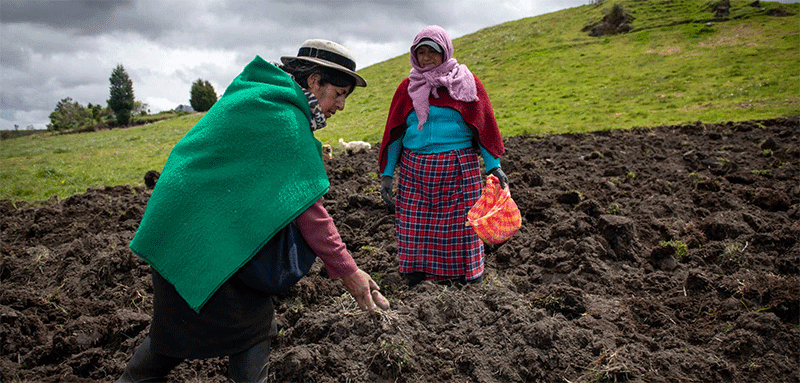
When discussing value-added agricultural products and crop diversification, a groundbreaking example is emerging from the cradle of potato biodiversity: the Peruvian Andes. Here, farmer-innovator Manuel Choqque, dubbed the “potato whisperer,” has successfully commercialized wine made not from grapes, but from the native tuber Oxalis tuberosa, commonly known as oca. This venture transcends novelty, representing a profound intersection of traditional knowledge, active varietal cultivation, and modern enology that offers a compelling model for adding significant value to root and tuber crops.
Choqque leverages the inherent high sugar content of specific oca varieties, which, under controlled fermentation, yields an alcohol by volume (ABV) of 11-12%, comparable to many grape wines. Since 2014, he has cultivated an astounding 90 new varieties of potato and oca, a practice of micro-selection aimed at optimizing traits for wine production, such as brix levels, starch-sugar conversion efficiency, and distinctive flavor profiles. His Miskioca wine line requires extended fermentation periods—eight months for the rosé, red, and sweet white, and four months for the dry white—indicating a complex biochemical process. Oca itself is part of a rich Andean agro-biodiversity, with over 900 known Peruvian varieties cultivated between 3,000 and 4,000 meters above sea level. Recent agronomic research, such as a 2023 study in the Journal of Root Crops, highlights oca’s resilience to frost and poor soils, coupled with its nutritional density in vitamins and antioxidants, making it an ideal candidate for climate-resilient farming. The creation of a luxury product like wine directly addresses a key challenge in smallholder systems: increasing economic return per unit of land and labor.
Manuel Choqque’s oca wine initiative is more than a local curiosity; it is a scalable case study in agricultural entrepreneurship. It demonstrates how deep understanding of plant pathology and genetics, combined with post-harvest processing innovation, can create entirely new markets for underutilized crops. For farmers, agronomists, and scientists, it underscores the immense potential lying within regional crop biodiversity. Investing in the selection, agronomic optimization, and value-chain development of native species like oca can drive rural economic development, enhance food system resilience, and offer consumers unique products. The lesson from the Andes is clear: the future of sustainable agriculture may depend on rediscovering and innovating with the genetic treasures we already possess.