Rostov Region, Veselovsky District, Khutor Leninsky
As part of the International Potato Tour, we visited JSC “Niva,” one of the leading vegetable-growing enterprises in southern Russia. With a history spanning nearly 100 years, the company remains a regional leader in potato, onion, and vegetable production.
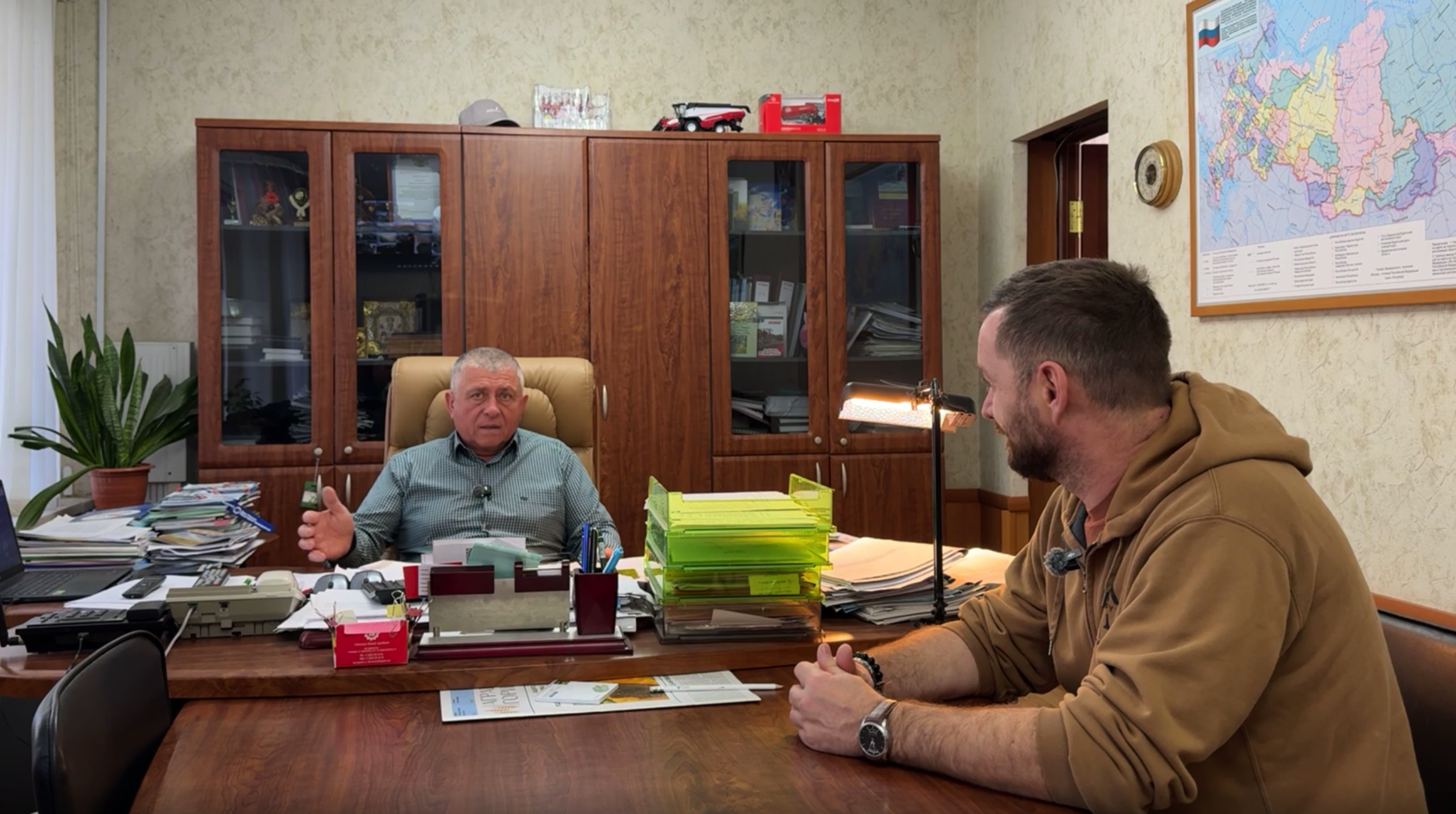
Director Alexey Mikhailovich Shurygin shared insights into the farm’s technological evolution, key challenges, and its development strategy through 2035.
History of the Farm: From a 1930 Collective to a Modern Joint-Stock Company
JSC “Niva” traces its origins back to 1930, when settlers from Ukraine founded the first agricultural community.
Over the decades, the farm changed several names—“Nezhdanovo,” “Leninsky Put”—and became a joint-stock company in 1991.
Since 2006, the farm has been led by Alexey Shurygin, who has transformed its technological base and turned the enterprise into one of the region’s most advanced vegetable producers.
From Livestock to Large-Scale Vegetable Production
When Shurygin joined the farm, it still maintained swine and dairy production. However, after a major livestock disease outbreak and regional decisions, animal husbandry was phased out.
This marked the beginning of rapid expansion in vegetable production.
Potato acreage increased from 60 hectares in 2006 to 680 hectares today.
Annual production volumes:
- Potatoes: 25–26 thousand tons (including seed)
- Onions: about 7 thousand tons
- Total vegetables: around 40 thousand tons per year
Yield levels remain stable:
- Table potatoes: 38–43 t/ha
- Seed potatoes: ~28 t/ha
Technological Breakthrough: From Manual Harvesting to Full Mechanization
In the mid-2000s, most vegetables in the farm were harvested manually.
Since then, the technological transformation has been dramatic:
- six modern potato harvesters have been purchased;
- beet and onion harvesters were added;
- soil management and field preparation systems were modernized;
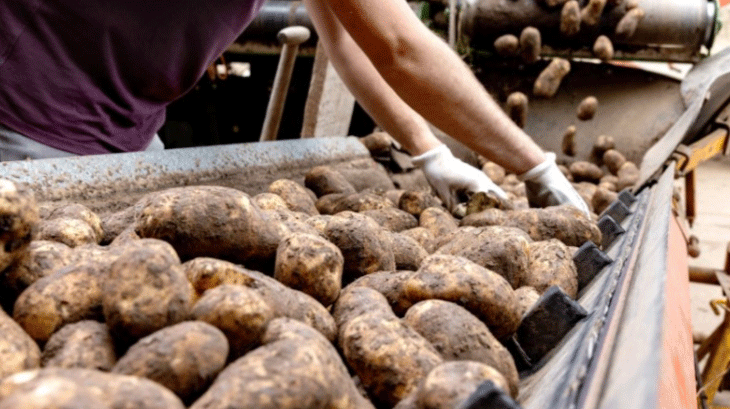
- advanced sorting, cooling, and storage facilities were introduced.
“The hardest part was teaching people to work in a new way—not with a hoe, but with technology,” says Shurygin.
“Today everything depends on precision operations, proper protection programs, and mechanized harvesting.”
Processing Potatoes: From Early Failures to Stable Success
JSC “Niva” was among the first farms in the region to grow potatoes for processing.
The beginning was difficult. In the first year, due to heat and disease, the harvest was only 12 t/ha, almost leading to the cancellation of the entire program.
The turning point came with the adoption of summer planting, a technique developed in collaboration with industry experts.
Today the farm consistently supplies 8,000 tons of processing potatoes annually.
For the enterprise, this is a stable market during periods of extreme price volatility in table potatoes.
Parsnip: A Niche Crop With Strong Potential
Searching for stability, the farm is mastering parsnip—challenging, but highly profitable.
- 2023: 3 ha
- 2024: 15 ha
- Goal: 2,000 tons in the coming years
Parsnip requires fine-tuned agronomic management, but offers attractive margins due to low competition.
Marketing and Sales: The Main Challenge Today
According to Shurygin, production grows steadily, but market conditions remain unstable.
Issues include:
- unpredictable price drops (table potatoes fell to 10 rub/kg this year);
- difficulty selling onions due to cheaper imports from Kazakhstan;
- lack of statistical monitoring and planning at the national level.
High production costs — especially energy — also reduce the competitiveness of Russian vegetables compared to neighboring countries.
Optimization and Automation: Strategy Through 2035
Optimization is now the cornerstone of the farm’s development.
Main priorities:
- full automation of sorting and pre-sale preparation;
- new grading lines for potatoes, onions, and beets;
- significant reduction of manual labor;
- increased productivity through engineering and technological solutions.
Today 75 people work in pre-sale preparation — the goal is to cut these costs by at least one-third.
“Soon all key processes will depend on engineers and technologists. Manual labor will become minimal, and that’s the only way to keep production volumes,” says Shurygin.
Lessons From China and a Global Perspective
Shurygin regularly studies international experience, and China made a particularly strong impression:
- extremely high automation levels;
- infrastructure that ensures precision and stability;
- advanced industrial culture and public standards.
The trip reshaped his view on vegetable processing — a capital-intensive sector requiring major long-term planning.
Conclusion
JSC “Niva” is a powerful example of a farm that evolved from a collective enterprise into a modern, technologically driven vegetable production complex.
With large acreage, advanced equipment, storage capacity, and a clear strategic vision, it remains one of the key vegetable producers in southern Russia.
The International Potato Tour continues to showcase real stories of farms that are shaping the future of the potato and vegetable industries.
Contacts — International Potato Tour
i@viktorkovalev.ru
WhatsApp: +7 961 472 02 02
https://potatoes.news/category/ipt