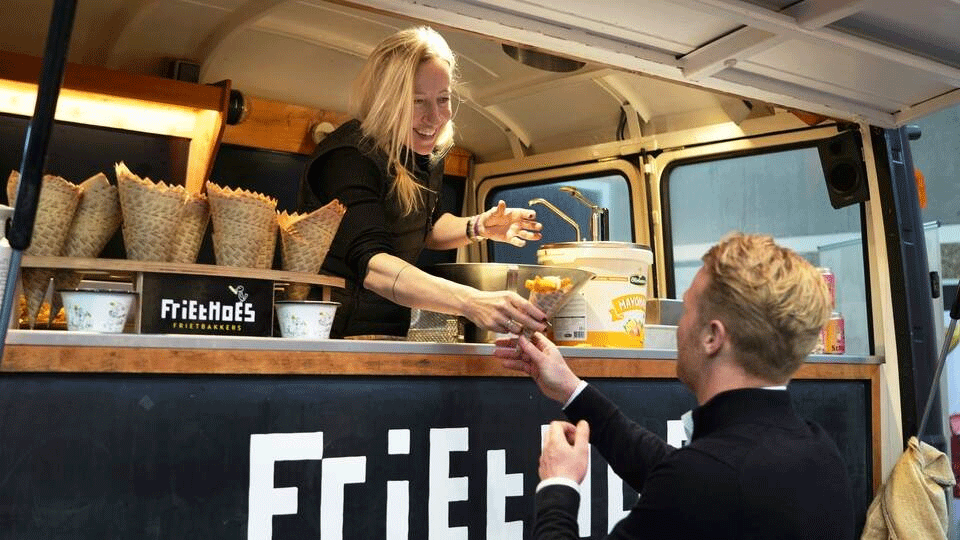
In a striking demonstration of market-driven growth, the Dutch artisan french fry producer Friethoes successfully raised €300,000 through crowdfunding in a single week to finance a major expansion of its facility in Nieuw-Vennep. The capital will enable the company to increase its annual production capacity from 10 million to 40 million portions. This planned quadrupling of output is a direct response to surging demand for its core product: fresh, skin-on fries made daily from Dutch potatoes, positioning itself in stark contrast to large-scale industrial producers who rely on freezing and preservatives. This model has proven highly successful, with the company reporting a quadrupling of its revenue from €1.5 million to €6 million over the past four years, supplying restaurants, supermarkets, and festivals.
The success of Friethoes is emblematic of a broader trend in the food industry. According to a 2024 report by Innova Market Insights, consumer demand for “craft” and “local” claims in food products continues to outpace the broader market, with premium potato products gaining significant traction. This expansion provides a timely and valuable market opportunity for Dutch potato growers. The failure of the processor CêlaVíta in August 2024 left growers like Bert Sloetjes with significant surplus and financial loss amidst a season of high yields. The scaling of a value-added, locally-focused operation like Friethoes can help absorb such surpluses and build a more resilient supply chain that is less vulnerable to the failure of a single large processor. This aligns with the European Union’s “Farm to Fork” strategy, which emphasizes strengthening local food systems and creating fairer economic returns for primary producers.
The Friethoes story is more than a single company’s expansion; it is a case study in the evolving dynamics of the potato value chain. It demonstrates the significant economic potential in premium, craft-oriented processing that prioritizes local sourcing and transparent production methods. For farmers, this trend opens alternative revenue streams that can mitigate risks associated with commodity markets and industrial processor dependency. For agronomists and agricultural engineers, it highlights the need for potato varieties and growing practices tailored to the quality demands of the fresh, skin-on market. The crowdfunding success proves that consumer appetite is strong for such products, signaling a clear direction for future innovation and investment in the sector.