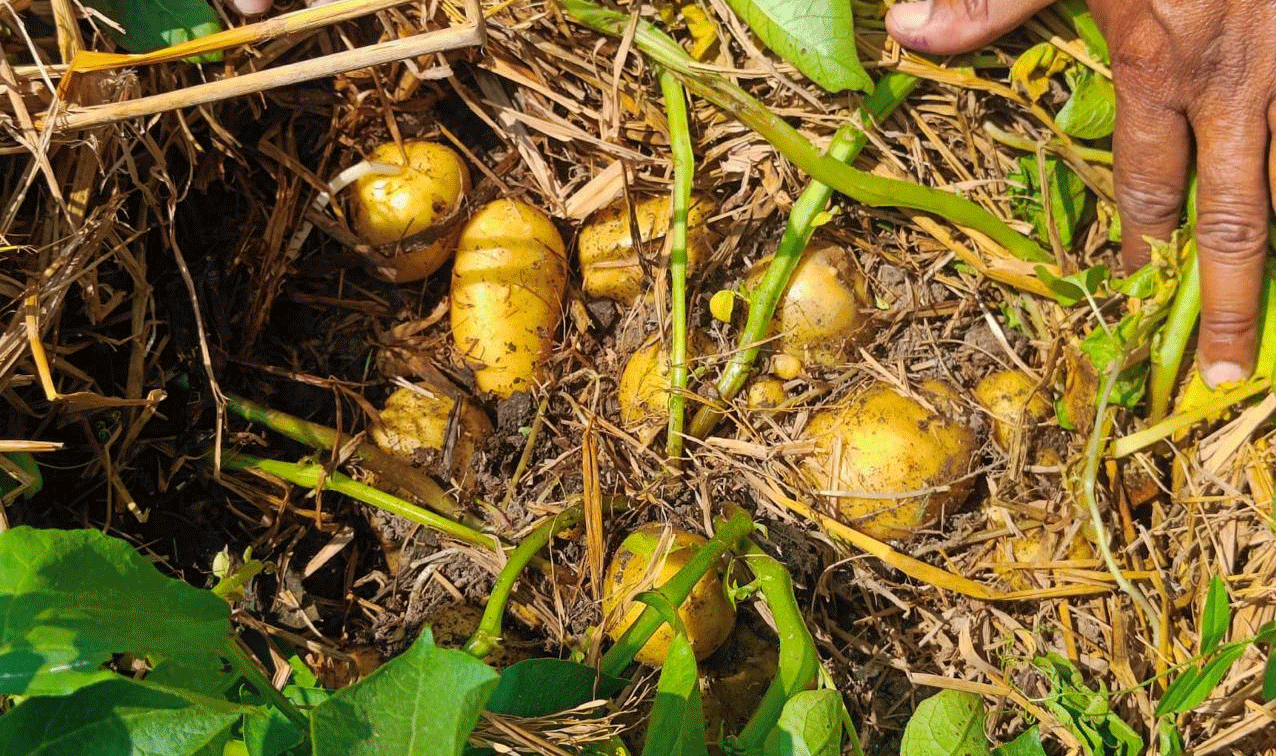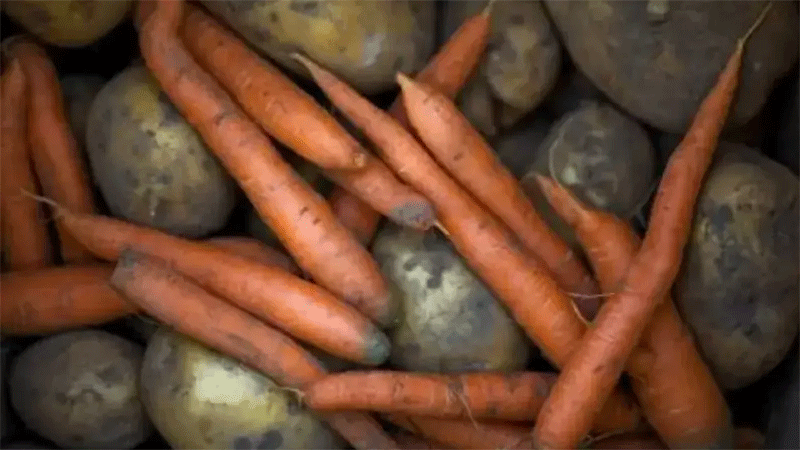
In a stark reminder of agriculture’s inherent vulnerability, farmers in Kazakhstan’s Pavlodar region are facing financial ruin after an early October blizzard buried their harvest under unexpected snow and ice. The disaster, which followed a month of persistent rains that delayed harvesting, has left over 1,000 hectares of potatoes and 600 hectares of carrots frozen solid across approximately 20 farms. For farmer Ramazan Kaliev, the loss of a third of his 320-hectare crop translates to a devastating personal loss of an estimated 450 million tenge (approx. $950,000). His lament, “We put in so much labor, so much investment… I don’t know how to work further,” echoes the desperation of many who now face loan repayments for equipment and inputs with no product to sell.
While regional officials have been quick to note that the frozen crops represent only about 3% of the area’s total potato plantings and will not affect market supply, this statistic offers little solace to the affected individuals. The core of the crisis lies in a systemic failure of safety nets. The government has declared the situation ineligible for state compensation, as official state-of-emergency protocols are typically triggered only by drought or flooding, not unseasonal snowfall. The proposed solution—loan restructuring—often creates a new problem: higher interest rates and an inability to secure new credit for the following season, effectively creating a financial trap. This incident is not an isolated one. A 2024 report from the UN’s Food and Agriculture Organization (FAO) emphasizes that increasing climate volatility, including early frosts and unseasonal precipitation, is a growing global threat to food security, particularly in regions with continental climates like Kazakhstan. The report stresses that modern agricultural resilience depends not just on on-farm adaptations but on robust financial instruments and flexible government support mechanisms tailored to a wider range of climate risks.
The tragedy in Pavlodar is a case study in modern agricultural risk. It underscores that a narrow focus on macro-level food security can overlook the micro-level catastrophes that bankrupt individual farmers and destabilize rural communities. For agronomists and farm owners globally, this event is a warning. Building resilience requires a dual approach: adopting agronomic strategies like earlier-maturing varieties and improved weather forecasting, while simultaneously advocating for the development of comprehensive crop insurance schemes and government policies that recognize the full spectrum of climate-induced disasters. The future of farming depends not only on what we grow, but on the financial and safety structures we build to protect those who grow it.