The Latvian government’s declaration of a nationwide agricultural state of emergency until November 4, 2025, underscores the severity of this year’s growing season. Driven by persistently wet weather, the situation has created a perfect storm of agronomic and economic challenges that threaten the viability of many potato farms. According to Aiga Kraukle, Chairperson of the Latvian Union of Potato Producers and Processors, the recovery will take more than a year, and some farmers face bankruptcy.
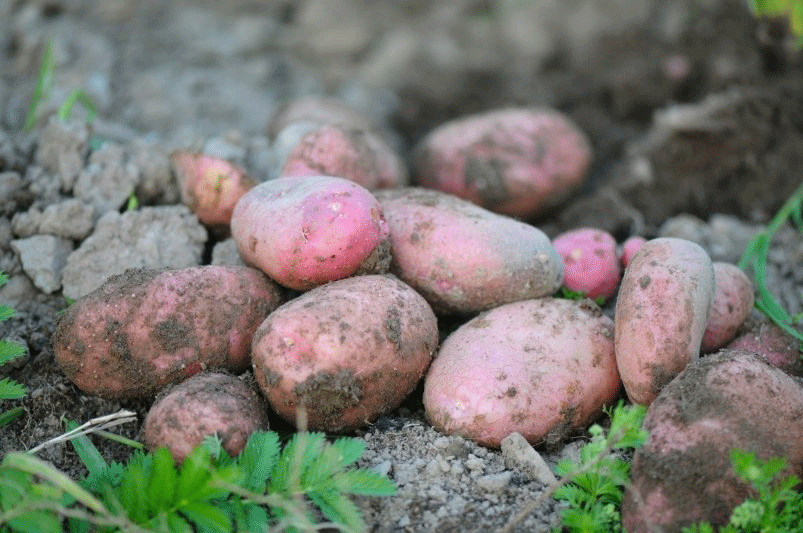
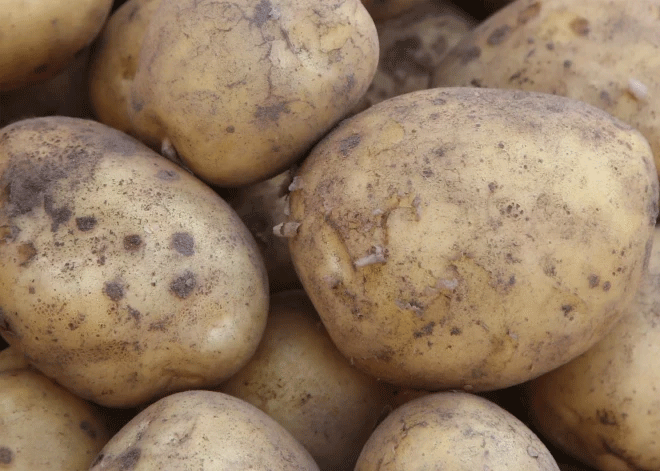
The core of the problem is in the fields. The harvest is significantly delayed and incomplete, with many fields too waterlogged for machinery. Kraukle projects that approximately 10% of the planted potato crop will be unharvestable, primarily due to in-field rot. Furthermore, the potatoes that are retrieved face a heightened risk during storage. Slow skin-set development and high moisture content mean that without meticulous drying, the entire harvest can spoil within weeks, compounding the initial field losses.
The Economic Paradox: High Costs in a Low-Price Market
This production crisis has not, paradoxically, translated into a retail price boom for farmers. Kraukle points to a critical market dynamic: a bountiful harvest elsewhere in Europe is keeping a lid on prices in supermarkets. This creates an impossible squeeze for Latvian growers. Their production costs have skyrocketed due to the inefficient, prolonged harvest and crop losses, yet the market price they can command is depressed by continental oversupply.
This disconnect means that while consumers may be shielded, the producers are bearing the full brunt. The only place where the real cost of production will be reflected is in direct-to-consumer sales at local markets, where prices are expected to be significantly higher.
The EU Response and the Broader Climate Context
In recognition of the scale of the disaster, the European Commission has approved €4.2 million in emergency aid for Latvian farmers. This support is crucial for short-term survival, but it highlights a growing trend. Such interventions are becoming more common as climate volatility intensifies. The European Environment Agency’s 2024 report on climate risks notes that extreme precipitation events, which disrupt soil workability and promote fungal diseases, are increasing in frequency across Northern Europe, making Latvian-style crises a potential blueprint for future challenges in the region.
The Latvian potato crisis is a stark reminder that modern agriculture operates on a razor’s edge. Even with the safety net of EU emergency funding, the fundamental vulnerabilities remain. Farmers are caught between increasingly unpredictable local weather patterns and a homogenized European market that can instantly negate local scarcity. For agronomists and farm owners, this underscores the urgent need for strategies that build resilience: investing in drainage infrastructure, selecting more weather-resilient varieties, and exploring diversified income streams to mitigate the risk of a single crop failure. The situation in Latvia is not an anomaly; it is a case study in the new normal of agricultural risk management.