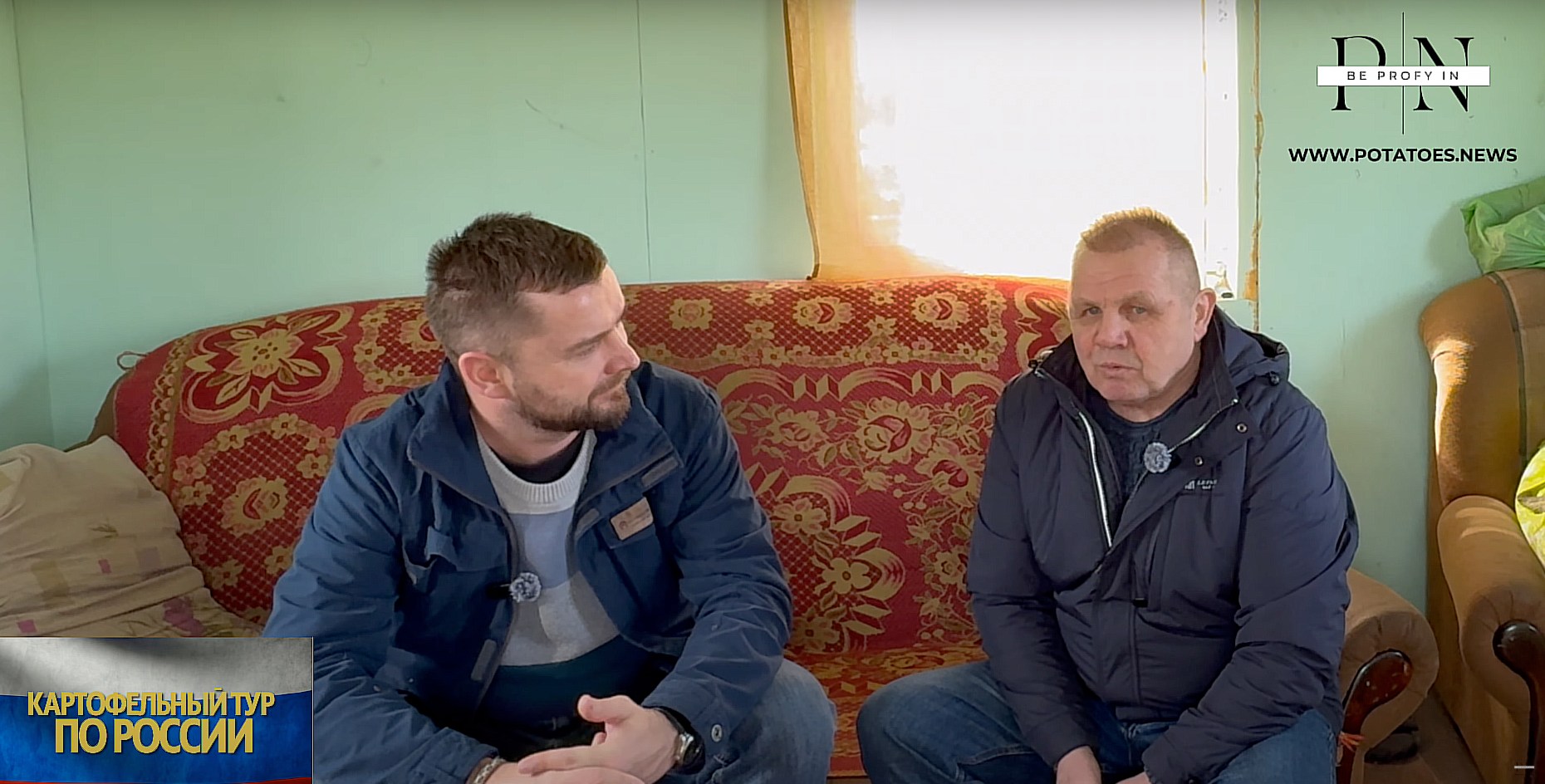
Visit of the “Potato Tour of Russia” to the family farm of Alexander Krylov (Arzamas District, Nizhny Novgorod Oblast)
Potato Tour of Russia: At Alexander Krylov’s Farm
Highlights: 30+ years in farming, 100+ ha of potatoes, ~90% mechanized operations, shortage of skilled operators, seed-quality first, practical storage and seed-treatment routines.
From six partners to a multi-generation family farm
After military service and work at Selkhoztekhnika, Alexander joined the Lenin State Farm (1985) and, in 1992, left with a group of ten to start independent farming. They began with 3 ha, worked as a team of six for 12 years, and then the next generation joined. As of January 29, Alexander’s son Denis officially took the lead.
Mechanization that fits the farm
The turning point was escaping manual labor: from diggers to a German E686 harvester (non-bunker, adapted to local row spacing). Today ~90% of operations are mechanized; palletizers are planned to reach 100%. The structural bottleneck is people: experienced operators are aging, while newcomers prefer fixed shifts. Reintroducing tractor/tech classes could help—modern tractors mean operators with GPS/autopilot and Common Rail, not just wrenches.
Equipment philosophy
Denis is meticulous about purchases: “better one reliable unit than two compromises.” When downtime is expensive, a proven John Deere can beat two cheaper alternatives.
Quality first: seed, rotation, discipline
The focus is quality, not just tonnes. Foundations:
- Healthy seed (regular upgrades to elite/super-elite, sometimes from meristem plants grown out in-house in partnership with Rosselkhozcenter).
- Clean rotations and soil readiness (don’t enter a wet field—clods mean damage and storage risks).
- Timing discipline (haulm desiccation, skin set). “Don’t be greedy”—those extra 10 days may ruin storability.
Seed treatment at the table: last season they moved treatment to the grading table (not on the planter) → 100% coverage and far less silver scurf by season’s end.
Storage & logistics
Partly underground stores with containerized handling (smooth, rounded interiors to minimize bruising), whitewashing, and periodic fumigation. In good years, saleable stocks sell out quickly; seed sorting typically starts around April 15.
Processing: stable prices vs. strict specs
Processing offers price stability, but demands irrigated potatoes and +10 °C storage, and any lapse in field discipline backfires in the store. Co-ops could help, yet “grower + processor” in one head risks a conflict of interest.
Potatoes News takeaway: Krylov’s farm shows a steady rise from the ground up: custom-fit machinery, uncompromising seed quality, disciplined agronomy, and a smooth succession to the next generation. Amid labor shortages and market swings, this is how consistency in quality is actually delivered.