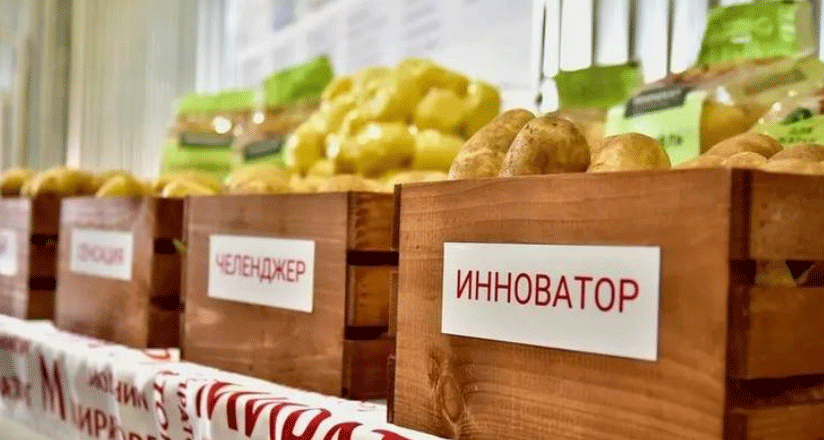
The 2024 harvest campaign in Siberia’s Krasnoyarsk Krai is progressing at an accelerated pace, outpacing last year’s timelines according to the region’s new Minister of Agriculture, Dmitri Voropaev. Current figures indicate that 73.7% of grain areas have been harvested, yielding 1.9 million tonnes of grain. This volume has already surpassed the region’s internal food security benchmark of 1.2 million tonnes. Simultaneously, 58.8% of the potato crop and 44.6% of vegetables have been gathered. Forage reserves are also robust, with 175,700 tonnes of hay and 902,600 tonnes of silage secured.
Despite the impressive pace, the harvest has not been without significant challenges. The chairman of the agrarian committee, Vladislav Zyryanov, noted that heavy August rains caused soil waterlogging in 20 districts. While the situation stabilized without a declared emergency, the weather variability has had a tangible impact on crop quality. A key concern emerging from the reports is a declining proportion of food-grade wheat and an increase in grain designated for animal feed.
This phenomenon of quality downgrade due to untimely rains is a well-documented agronomic challenge. Excess moisture during the harvest period can lead to pre-harvest sprouting, fungal diseases like fusarium head blight, and a decrease in the protein content and test weight of the grain—all factors that disqualify it from the more lucrative food market. A 2023 global study published in Nature Food highlighted that climate volatility is increasingly causing yield and quality gaps worldwide, with post-heading precipitation being a primary driver of losses in cereal quality. The situation in Krasnoyarsk is a clear example of this trend, where high yield volumes do not automatically translate to high economic returns.
The assurance that “we will not be left without bread” indicates that food supply is secure, but the economic impact on grain farmers could be substantial. The focus now shifts to post-harvest logistics and market strategy, ensuring that the high-quality grain that was successfully harvested is stored correctly, and that the larger volume of feed grain is efficiently channeled to the region’s livestock sector, which is well-supported by the reported forage reserves.
The Krasnoyarsk harvest is a tale of two metrics: quantity and quality. The region has successfully achieved a rapid harvest and exceeded its volume targets, demonstrating operational efficiency. However, the weather-induced shift in grain quality underscores the growing vulnerability of agricultural productivity to climate volatility. For farmers and policymakers, this year’s results emphasize the need for continued investment in resilient crop varieties, advanced weather forecasting, and flexible harvest strategies to protect not just the quantity, but the economic value of future harvests.