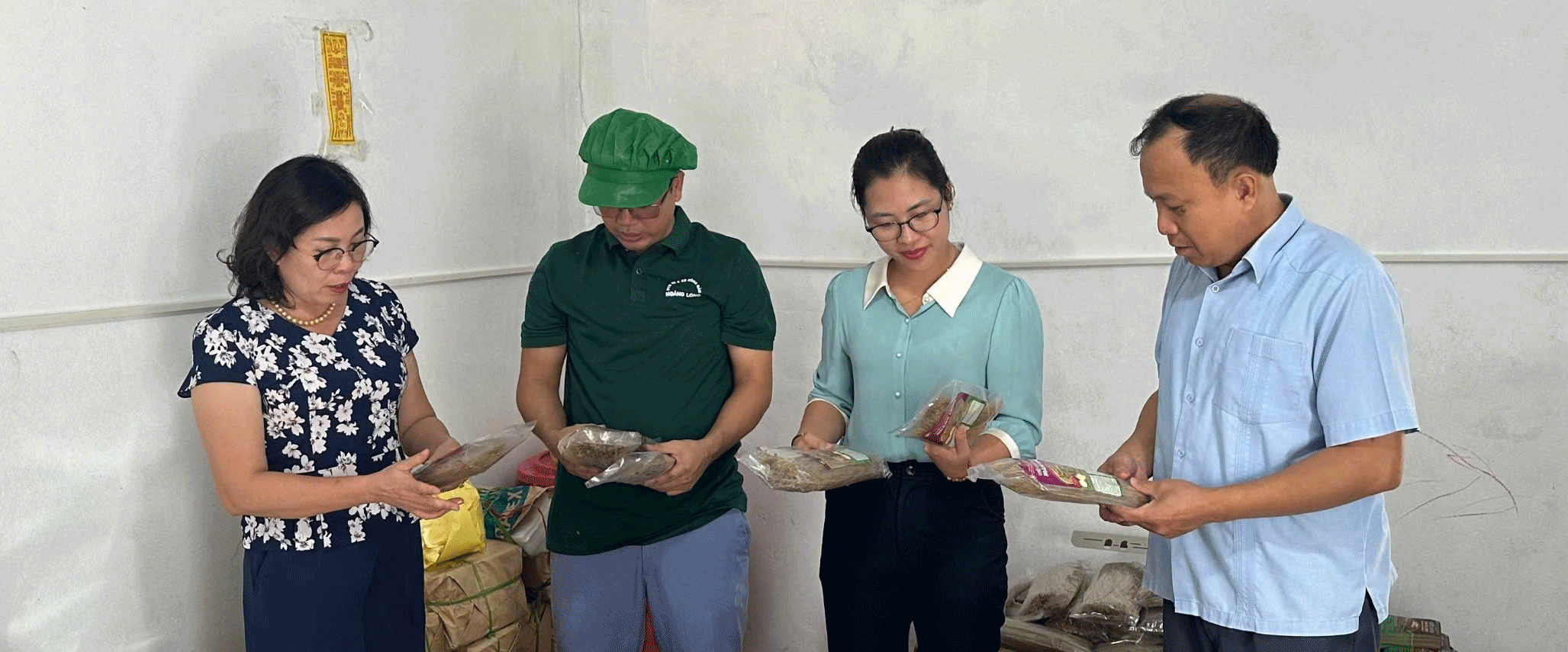
In the Nho Quan district of Vietnam, the story of sweet potato production has been a classic tale of agricultural volatility: bountiful harvests followed by plummeting prices, leaving farmers struggling to profit from their labor. To break this cycle, the Hoang Long Agricultural Production and Processing Cooperative, established just this past April, has taken a decisive step. With support from the Provincial Cooperative Union, the co-op has officially adopted an integrated model for producing and processing sweet potato products, specifically focusing on vermicelli noodles. This strategic pivot from selling raw commodities to marketing finished goods offers a powerful blueprint for farmers and cooperatives globally.
The core of the co-op’s strategy is a 1 billion VND investment (approximately $39,000 USD) in a dedicated processing line. This investment, partially funded by the state budget, includes critical equipment like a root washer, crusher, dry milling system, flour mixers, and a semi-automatic noodle press. This infrastructure allows the co-op to control the process from raw tuber to packaged noodle, dramatically increasing the value captured on the farm. Currently, the facility produces an average of 2 quintals (200 kg) of “Hoang Long” brand sweet potato vermicelli daily. This move from bulk commodity to a branded, shelf-stable product is a direct response to the price instability that plagues root crop farmers everywhere.
The economic rationale is clear. According to a 2023 report by the Food and Agriculture Organization (FAO), post-harvest losses for root and tuber crops can exceed 25% in developing regions due to inadequate storage and market gluts. Furthermore, a study on value-added agriculture published in the Journal of Agricultural and Applied Economics consistently shows that processing raw commodities into consumer-ready products can increase their value by 50% to 100%, or even more. The Hoang Long co-op is already seeing these benefits, having secured offtake agreements with distributors and stores across multiple districts, ensuring a stable and predictable revenue stream.
Beyond the product itself, the model creates significant community benefits. The co-op provides employment for five local workers at a stable monthly salary of 6 million VND per person, injecting reliable income into the rural economy. This aligns with global data from the International Labour Organization (ILO), which indicates that agro-processing is a significant source of non-farm rural employment, helping to stabilize communities and reduce urban migration.
The Hoang Long Cooperative’s model demonstrates that the path to greater profitability and resilience for root crop farmers does not always lie solely in increasing yield. Instead, strategic investment in post-harvest processing and value addition is a powerful tool to mitigate market volatility, reduce waste, capture a larger share of the consumer dollar, and strengthen rural economies. For agronomists and farm owners, the lesson is to look beyond the field and consider how integrating small to medium-scale processing can de-risk primary production. For engineers and scientists, it highlights the need for developing affordable, efficient, and scalable processing technologies tailored to the needs of local cooperatives.