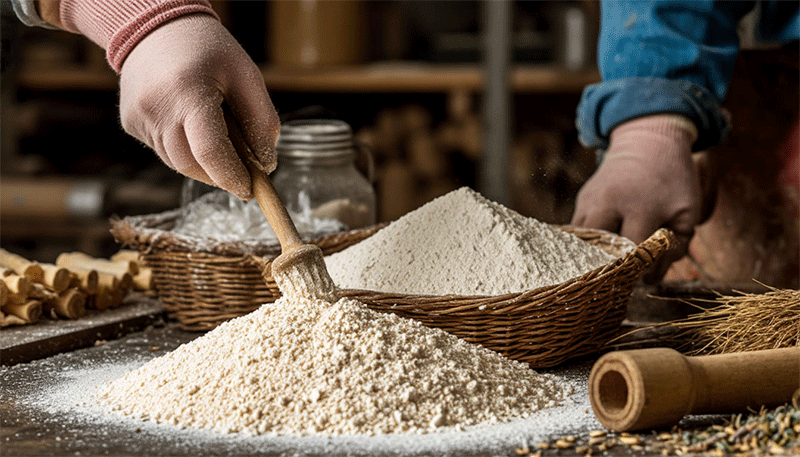
In a significant development for the agricultural value chain, global ingredient solutions leader Ingredion has announced a $50 million investment to expand and modernize its starch production facility in Cedar Rapids, Iowa. The expansion is specifically targeted at increasing output for the packaging and papermaking industries, signaling a robust and growing industrial offtake for corn-derived products. Notably, the company has confirmed that the primary raw material, corn, will be sourced entirely from within Iowa, creating a direct and value-added market for local producers.
This investment is more than a simple capacity increase; it’s a modernization project aimed at enhancing efficiency and product capabilities for specialized industrial starches. These starches are essential components in a wide range of non-food applications, including:
- Sustainable packaging: As a biodegradable alternative to synthetic polymers.
- Papermaking: As a key adhesive to strengthen paper and cardboard.
- Corrugating: To create the rigid, fluted structure in cardboard.
The commitment to source all corn from Iowa farmers is a powerful statement. Iowa is already the top corn-producing state in the U.S., with the USDA forecasting a 2024 production of 2.5 billion bushels. While the majority of Iowa’s corn traditionally goes to ethanol production and livestock feed, this expansion represents a strengthening third pillar of demand: the industrial bio-economy. This diversification helps stabilize local corn prices and provides farmers with a reliable, high-volume buyer for their crops.
The high-profile support from Iowa Governor Kim Reynolds and Cedar Rapids Mayor Tiffany O’Donnell at the announcement underscores the project’s economic importance, highlighting the symbiotic relationship between advanced manufacturing and agriculture in the region.
Ingredion’s $50 million expansion is a strong market signal for corn producers and agricultural professionals. It reflects a confident, long-term bet on the growth of industrial bio-products and the central role of corn as a renewable feedstock. For Iowa’s farmers, this translates to increased local demand, potential premiums for quality, and greater market diversification, reinforcing the state’s position not just as a agricultural powerhouse, but as a hub for biobased innovation. This move aligns with a broader trend where agriculture is increasingly integral to industrial supply chains, moving beyond traditional food and feed roles.