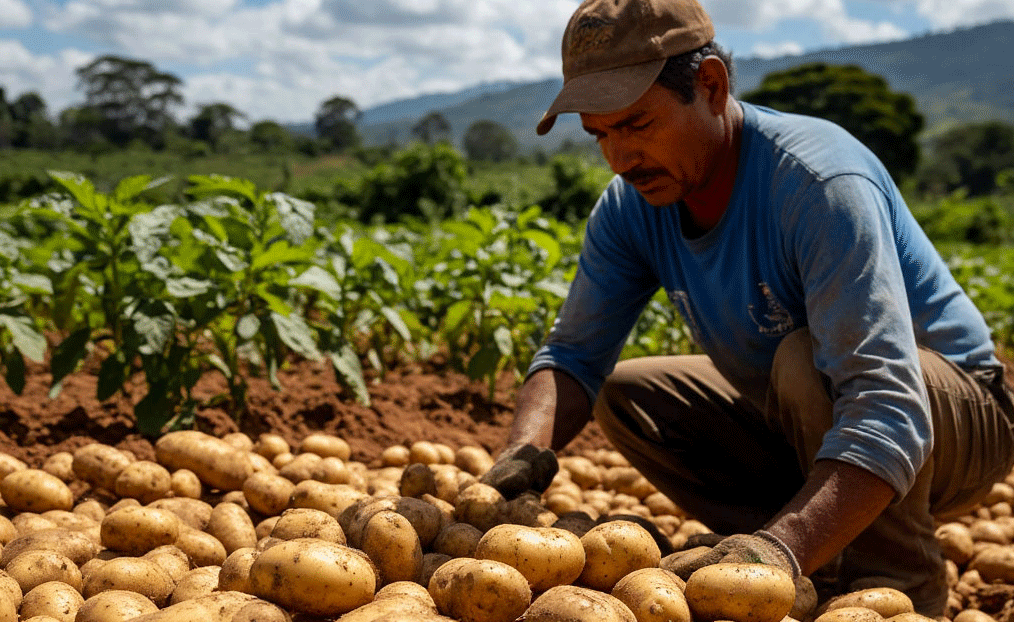
Cristalina, a key potato-producing region in Goiás, Brazil, is expected to harvest around 40% of its crop by the end of July, with peak activity occurring between late July and August. Planting began in February and concluded in June, about 5% ahead of the typical schedule, which usually extends into July. Notably, 60% of the crops were planted between March and April, setting the stage for an earlier harvest conclusion—likely by October, avoiding the usual extension into November.
Weather Challenges Impact Yield
The season faced significant hurdles, including high temperatures in February and March, which accelerated the growth cycle but reduced productivity. According to agronomists, excessive rainfall in April further stressed crops, while a high incidence of whiteflies—particularly during warmer periods—led to smaller tuber sizes. Farmers reported that these combined factors contributed to below-optimal yields in the early harvest phase.
Recent data from Embrapa (Brazilian Agricultural Research Corporation) highlights that extreme weather events, including unseasonal heat and heavy rains, have become more frequent in Brazil’s Cerrado region, affecting key crops like potatoes. Such conditions align with broader climate trends impacting agricultural productivity.
Improved Conditions Bring Hope
Since May, weather conditions have stabilized, with milder temperatures and balanced rainfall, offering relief to farmers. Experts predict that these improved conditions will help normalize tuber size from August onward and reduce whitefly pressure, potentially increasing productivity in later harvests.
So far, the average yield is estimated at 40 tons per hectare, slightly below the region’s typical range of 45-50 tons per hectare under optimal conditions. However, if weather trends remain favorable, later harvests could see a recovery in both tuber quality and overall output.
While Cristalina’s potato season started with weather-related setbacks, the recent stabilization in climate offers optimism for the remaining harvest. Farmers and agronomists must remain vigilant against pests and adapt planting strategies to mitigate future climate risks. With proper management, the region could still achieve a respectable yield by season’s end.