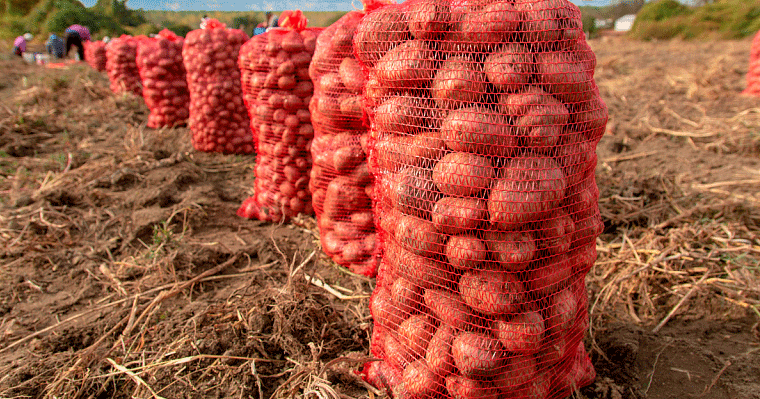
Seasonal agricultural labor remains a vital part of the farming economy, providing temporary employment for thousands of workers. According to recent reports from the Ministry of Labor and Social Protection, harvesting potatoes and other vegetables can yield daily wages ranging from Br30 to Br70 (approx. $10–$23), with some regions offering up to Br110 ($36) for high productivity. These roles require no specialized training, making them accessible to students, retirees, and part-time workers.
Beyond Farming: Additional Seasonal Jobs
While crop harvesting is a major draw, the ministry highlights other seasonal opportunities, including:
- Landscaping and green space maintenance (parks, cemeteries, public areas)
- Recycling and waste sorting
- Utility and housing maintenance (ЖКХ)
These roles provide similar wage structures, ensuring diverse income options during peak seasons.
Logistics and Employment Conditions
To support workers, many employers offer free transportation to job sites. Contracts are typically short-term, either under a fixed-term labor agreement or a civil-law contract, ensuring legal protections for temporary workers.
Global and Local Wage Comparisons
Globally, seasonal agricultural wages vary significantly. For example:
- In the U.S., farmworkers earn $15–$25/hour (USDA 2023).
- In EU countries, daily rates range from €50–€120 depending on the crop and region.
While Belarusian wages are lower, the cost of living and labor demand must be considered.
Seasonal agricultural work remains a flexible income source, particularly in regions with high farming activity. While wages may not match those in Western markets, the accessibility and supplementary benefits (like transportation) make it a viable option for many. Farmers and agribusinesses can leverage this labor pool to meet peak-season demands efficiently.