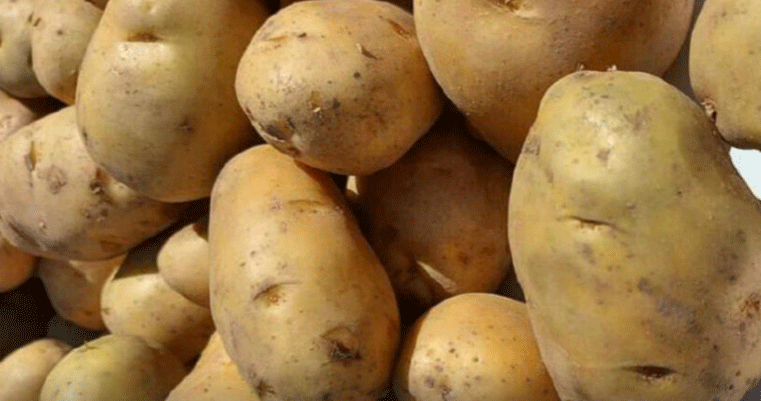
From January 1 to June 13, 2025, inspectors from the Rosselkhoznadzor (Russian Federal Service for Veterinary and Phytosanitary Surveillance) examined more than 32,000 tons of potatoes imported from China through the “Kani-Kurgan” checkpoint. This volume represents 43% of all fresh produce entering the Amur Region during this period.
Strict Controls, No Violations Detected
Laboratory tests conducted by the Amur branch of the Federal State Budgetary Institution “National Center for Safety of Plant Products” (FGBU “NCBRSF”) confirmed that no quarantine pests or diseases were present in the shipments. All imported potatoes were cleared for distribution within Russia.
Comparison with 2024: A Surge in Imports
In contrast, during the same period in 2024, only 823 tons of potatoes were imported from China to the Amur Region. The nearly 40-fold increase in 2025 highlights a growing reliance on Chinese potato supplies, possibly due to higher demand, competitive pricing, or domestic production shortages.
Why This Matters for Farmers and Agronomists
- Food Security: Ensuring safe imports is crucial to preventing the spread of plant diseases.
- Market Trends: The sharp rise in imports may affect local potato prices and farming profitability.
- Quality Assurance: Strict phytosanitary controls help maintain high standards for imported produce.
The significant increase in Chinese potato imports to the Amur Region in 2025—without any detected quarantine risks—demonstrates both efficient regulatory oversight and a shifting supply dynamic. Farmers and agricultural stakeholders should monitor these trends to anticipate market changes and potential impacts on domestic production.