

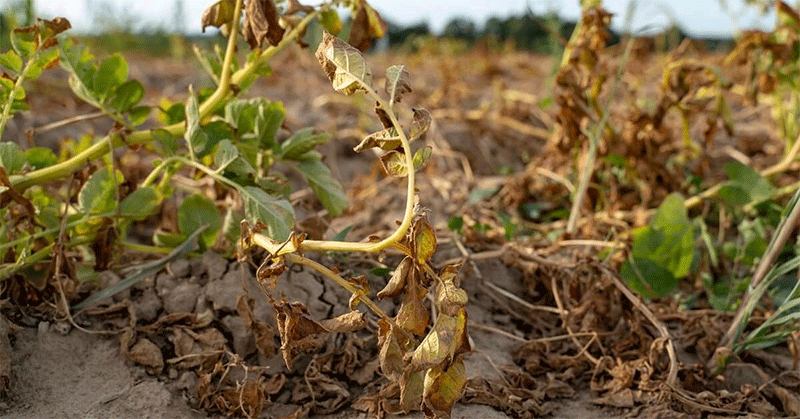
Potatoes, a staple crop in Switzerland, are increasingly vulnerable to extreme heat and water scarcity. According to recent reports, temperatures above 27°C halt potato growth entirely, and prolonged drought exacerbates the problem. In the canton of Vaud, where rainfall has been absent for weeks—except for damaging hailstorms—farmers like Sébastien Pasche, vice-president of the Swiss Potato Producers Union, fear yield losses of up to 50% if rain doesn’t arrive within the next two and a half weeks.
Declining Small-Scale Production
The challenges of climate change and disease pressure are driving small-scale potato producers out of business. In Fribourg, the number of small potato farmers dropped from 360 to 276 in just ten years. While some farmers have irrigation systems, they remain a minority—less than 15%—highlighting a critical gap in climate resilience.
Irrigation as a Partial Solution
To combat water shortages, new irrigation projects are emerging, such as those in the Broye region, supported by federal and cantonal authorities. However, the paradox remains: agriculture must irrigate more efficiently while reducing overall water consumption.
Globally, similar trends are observed. A 2023 study by the Food and Agriculture Organization (FAO) warns that rising temperatures could reduce potato yields by 18-32% in Europe by 2050 if adaptive measures aren’t implemented. Meanwhile, the European Environment Agency (EEA) stresses that sustainable water management will be crucial for maintaining crop productivity.
Swiss potato farming is at a crossroads, with climate change posing an existential threat to both yields and small-scale producers. While irrigation projects offer hope, long-term solutions—such as drought-resistant varieties and precision agriculture—must be prioritized to ensure food security. Without swift action, the decline in potato production could accelerate, impacting farmers, markets, and consumers alike.