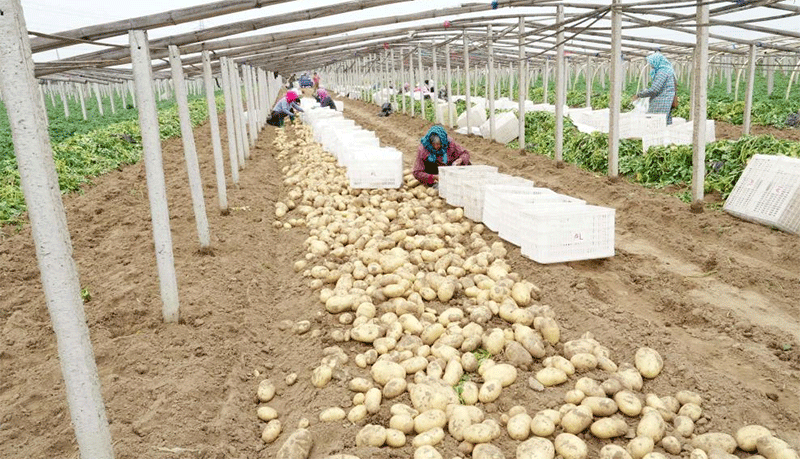
On May 23, farmers in Changli County, Hebei Province, began harvesting potatoes, marking the start of the season for supplying fresh produce to markets. The region, known for its fertile soil and favorable climate, plays a key role in China’s potato production—a crop that contributes significantly to both food security and agricultural economies worldwide.
According to the Food and Agriculture Organization (FAO, 2023), China remains the world’s largest potato producer, with an estimated 94 million metric tons harvested annually. However, yield gaps persist, with Dutch and German farmers averaging 40–50 tons per hectare, while many Chinese farms yield 20–30 tons. Bridging this gap requires adopting precision agriculture, improved seed varieties, and optimized irrigation.
Key Strategies for Higher Potato Yields
- Precision Farming & Technology
- Satellite imaging and IoT-based soil sensors can reduce water and fertilizer waste by up to 30% (International Potato Center, 2024).
- Automated harvesters, like those used in Europe, cut labor costs by 50% while minimizing tuber damage.
- Climate-Resilient Varieties
- Heat-tolerant and disease-resistant potato strains (e.g., Zhongshu 18) are critical as temperatures rise. A 2023 study in Nature Agriculture warns that global potato yields could drop 10–20% by 2050 without adaptation.
- Market-Driven Timing
- Changli’s farmers time harvests to meet peak demand, ensuring better prices. The National Bureau of Statistics (2024) reports a 12% price surge for early-season potatoes in urban markets.
The Changli potato harvest highlights both the potential and challenges of modern agriculture. By integrating technology, climate-smart varieties, and market strategies, farmers worldwide can enhance productivity and sustainability. Collaboration between agronomists, engineers, and farmers will be key to feeding a growing population.