Alberta, Canada’s largest potato producer, has seen impressive growth in recent years, yielding approximately 1.5 million tons of potatoes annually. However, the outlook for 2025 remains uncertain, with weather challenges and trade threats from the United States posing potential risks to the province’s potato industry.
Terence Hochstein, President of the Alberta Potato Growers Association, explains that the province’s potato cultivation primarily relies on irrigation from the spring runoff from the nearby Rocky Mountains. With unpredictable snowpack levels, farmers are unsure how the runoff will affect their water supply for the season. “We need as much snow as possible in the Rockies. All our irrigation depends on the spring melt to fill our reservoirs,” Hochstein says. “For now, we’re concerned but it’s too early to panic.”
Alison Davies, a potato grower near Taber, operates North Paddock Farms with 283 hectares of land. She is keeping a close eye on the weather and water reserves, particularly through the provincial government’s climate and reservoir data. Despite the challenges of 2024—characterized by fluctuating weather conditions from heavy rain to extreme heat—Davies is cautiously optimistic. “We ended the year in much better shape than I expected. But we know that extreme heat can strike unexpectedly, so we are adjusting our practices,” she explains.
Adapting to Climate Challenges
The unpredictable nature of climate has prompted Alberta’s farmers to adapt. Traditionally, they plant potatoes in April to avoid the intense heat of July during the flowering period. But as climate patterns grow more erratic, some farmers are considering starting as early as April 1 to avoid these hot spells. “We’ve never lost a crop in January. So, it’s too early to panic,” says Hochstein.
However, if extreme weather continues, farmers may need to adopt even more drastic changes to their cultivation schedules and techniques to ensure successful harvests.
U.S. Tariff Threats and Market Risks
Beyond climate concerns, Alberta’s potato growers are also facing uncertainty due to potential U.S. tariffs. While some potatoes are exported to the United States, Hochstein is confident that growers have options, particularly because Alberta is close to British Columbia’s ports for access to other international markets. However, the risk is more significant for seed potato producers—who account for 15% of Alberta’s potato industry—who export to 29 U.S. states. U.S. tariffs could lead to higher costs for American buyers, causing them to seek alternatives.
As a result, Alberta potato growers are bracing for the potential impact of these trade tensions. “The stress is higher for seed producers, who may see their products priced out of the U.S. market,” says Hochstein.
A Bright Spot: Processed Potato Market Growth
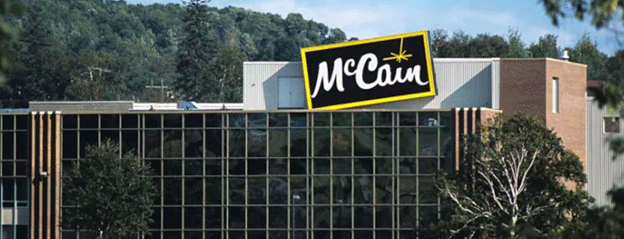
On a more positive note, 2025 may bring significant opportunities in the processed potato sector. Around 80% of Alberta’s potatoes are processed into fries or chips. Major industry players like McCain Foods, Cavendish, and Old Dutch have established processing facilities in the province, which has bolstered demand for local potatoes.
In fact, McCain Foods is set to open a new warehouse in Coaldale, which will further boost the local potato market. Despite a slight decline in acreage—from 32,374 hectares in 2023 to 30,958 hectares in 2024—Hochstein remains optimistic, as the new processing facilities will likely lead to increased demand and a recovery in production numbers.
“Production should increase because we’ll be able to sell more potatoes to these facilities,” Hochstein says, signaling a positive outlook for the Alberta potato sector despite the broader challenges.
The outlook for Alberta’s potato industry in 2025 is a mix of cautious optimism and uncertainty. While the effects of climate change, potential U.S. tariffs, and unpredictable weather patterns are significant concerns, the growing demand for processed potatoes offers a hopeful future for the province’s growers. With careful adaptation to changing conditions and continued growth in processing capacity, Alberta’s potato farmers are poised to navigate the challenges of 2025 with resilience and innovation.