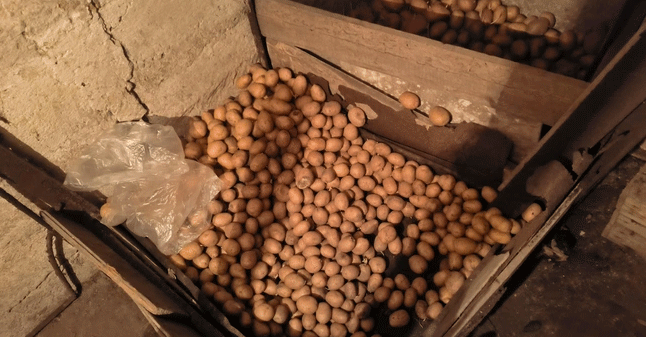
This season, potato prices in Russia have shocked consumers, reaching 100 rubles per kilogram ($1.10/kg)—a steep increase for a staple once considered the cheapest food item. While officials blame reduced backyard farming, smallholders argue that selling their surplus is neither practical nor profitable.
The Surplus Dilemma: “We Just Throw It Away”
Many small farmers grow more potatoes than they consume but see no benefit in selling the excess.
- Ignat, a gardener from Tula, plants potatoes on 0.02–0.04 hectares (200–400 m²), yielding 400 kg per season. His family consumes only 150 kg, discarding the rest.
- Arseny, a beekeeper and nutria farmer, uses 0.04 hectares (400 m²) but feeds most of his harvest to livestock, unaware of market prices until recently.
Despite high retail prices, smallholders face three key barriers to commercialization:
- Low Profitability – Selling small quantities isn’t worth the effort. Farmers would need to scale up significantly to make a profit, but:
- Market fees cut into earnings.
- Wholesale buyers demand tons, not kilos.
- Labor costs (planting, harvesting, transporting) make small sales unviable.
- Rising Input & Machinery Costs
- Tractor services have surged to 50,000 rubles ($550) per hectare due to fuel and parts inflation.
- Soil quality issues (high acidity) require costly amendments like lime or mustard green manure, adding 10,000+ rubles ($110+) per plot.
- Distrust of Commercial Farming Practices
- Many smallholders avoid chemicals, fearing store-bought-quality potatoes.
- Ignat notes: “If you use chemicals, you might as well buy from the supermarket.”
Will Prices Drop Soon?
Some farmers predict a price correction (30–60 rubles/kg) once the new harvest arrives. However, long-term trends suggest structural issues:
- Declining small-scale production (fewer people grow potatoes as a side hustle).
- Labor and machinery shortages (fewer tractors, expensive repairs).
- Retail monopolies keeping prices high despite local surpluses.
A Broken System
The potato crisis highlights a disconnect between small farmers’ capabilities and market realities. Without better infrastructure, fair pricing, and incentives, surplus potatoes will keep rotting in cellars instead of reaching consumers.

