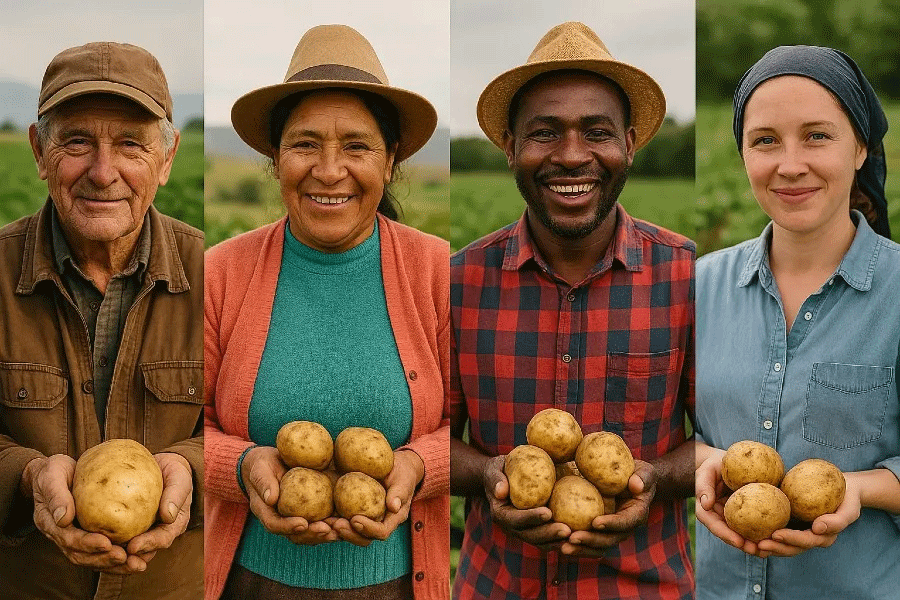
Potato farming is more than an occupation—it’s a way of life. From the misty highlands of Peru to the vast fields of Prince Edward Island, farmers share an unspoken connection with the crop they cultivate. A 2023 report by the Food and Agriculture Organization (FAO) highlights that over 1 billion people worldwide rely on potatoes as a primary food source, with smallholder farmers producing nearly 80% of the crop in developing regions. Yet, what statistics don’t capture is the emotional and generational ties that bind growers to their fields.
A Crop That Tests and Teaches Resilience
Potatoes are notoriously demanding. They require precise soil conditions, balanced moisture, and vigilant pest management. Climate change has exacerbated these challenges, with droughts and floods reducing global yields by 5–15% (International Potato Center, 2024). Despite this, farmers persist—driven by a mix of necessity and passion.
- In Ireland, where potatoes are deeply tied to cultural identity, farmers have adopted blight-resistant varieties to combat historical vulnerabilities.
- In South Africa, smallholders use intercropping with legumes to improve soil fertility and reduce pest pressures.
- In the Netherlands, precision farming technologies help growers optimize irrigation and fertilization, boosting yields by 20–30%.
Community and Innovation Under the Spudfluence
Potato farming fosters collaboration. In Andean communities, farmers practice “ayni”—a Quechua tradition of reciprocal labor—to plant and harvest collectively. Meanwhile, in North America, cooperatives share storage facilities to minimize post-harvest losses, which can reach 25% in developing nations (World Potato Congress, 2023).
Innovation thrives under this crop’s influence:
- Kenyan farmers use mobile apps to monitor soil health and predict disease outbreaks.
- European agronomists are pioneering AI-driven storage systems to extend shelf life.
- Peruvian breeders preserve 4,000+ native potato varieties, safeguarding genetic diversity.
Generational Legacy: Passing Down the Spudfluence
For many families, potato farming is an heirloom trade. In Idaho, USA, multi-generational farms account for 70% of the state’s potato production (USDA, 2023). Knowledge is transferred not through manuals but through shared labor—grandparents teaching grandchildren how to read soil moisture by touch or time planting by the moon.
Yet, the next generation is blending tradition with technology. Young farmers in India are adopting hydroponic potato cultivation, while those in Poland experiment with vertical farming to save space and water.
The True Harvest of Potato Farming
The potato’s influence extends far beyond economics. It cultivates resilience, nurtures community, and bridges generations. As climate and market pressures intensify, the world’s potato farmers continue to adapt—not just for survival, but out of profound respect for the crop that sustains them.
In the words of a Peruvian elder: “We do not inherit the land from our ancestors; we borrow it from our children.” The spudfluence ensures that this promise endures.

