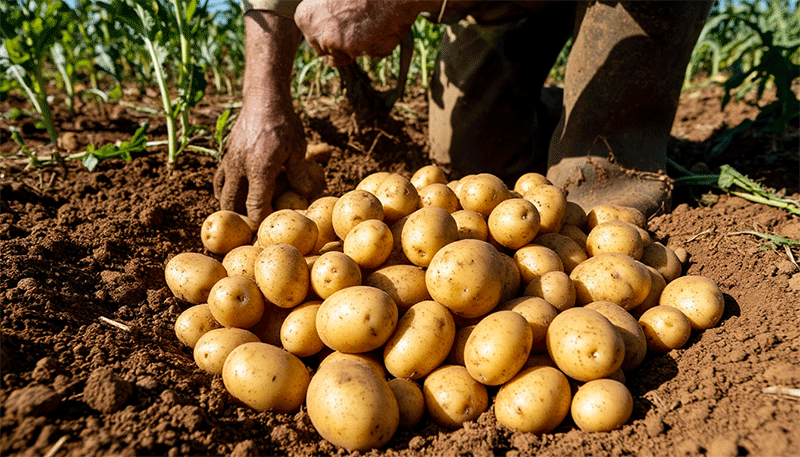
Recent downpours in Tyumen have delivered half the region’s monthly average rainfall in just weeks, jeopardizing early potato crops. Ivan Simishchenko, an agronomist at Krimm Agrofarm, warns that waterlogged fields could lead to significant losses: “Flooded areas are unrecoverable—potatoes may rot rapidly under these conditions.” The threat extends beyond moisture alone; untreated soils are prone to late blight (Phytophthora infestans) and bacterial soft rot, which thrive in wet environments.
Why Waterlogging Destroys Potato Crops
Excess water:
- Deprives tubers of oxygen, causing cell death and rot.
- Activates pathogens: The Russian Phytopathological Society reports a 20–30% higher disease incidence in waterlogged fields.
- Delays maturity, reducing marketable yield by up to 40% (source: All-Russian Potato Research Institute).
Small-scale growers can shield plants with temporary covers (e.g., tarps), but this is impractical for large farms.
Proactive Measures to Save the Harvest
- Drainage Systems:
- Install temporary trenches to divert excess water (effective for up to 5-hectare plots).
- Commercial farms should invest in subsurface drainage, shown to reduce losses by 15–25% (Journal of Agricultural Engineering).
- Disease Prevention:
- Apply copper-based fungicides preemptively; trials in similar climates cut blight infections by 50%.
- Remove infected plants immediately to curb spread.
- Post-Rain Recovery:
- Aerate soils with deep tilling once fields dry.
- Monitor tubers for early signs of rot (soft spots, foul odor) and sort aggressively before storage.
Commercial Farms Weather the Storm
Krimm Agrofarm remains optimistic, citing robust crop rotation and disease-resistant varieties as buffers against losses. However, Simishchenko stresses that August’s weather will be decisive: “If rains persist, even prepared farms face challenges.”
Tyumen’s potato growers must act swiftly to combat waterlogging and disease risks. While smallholders can employ quick fixes like covers, large-scale producers should prioritize long-term drainage solutions and integrated pest management. With careful intervention, farmers can salvage yields despite the relentless rains.

