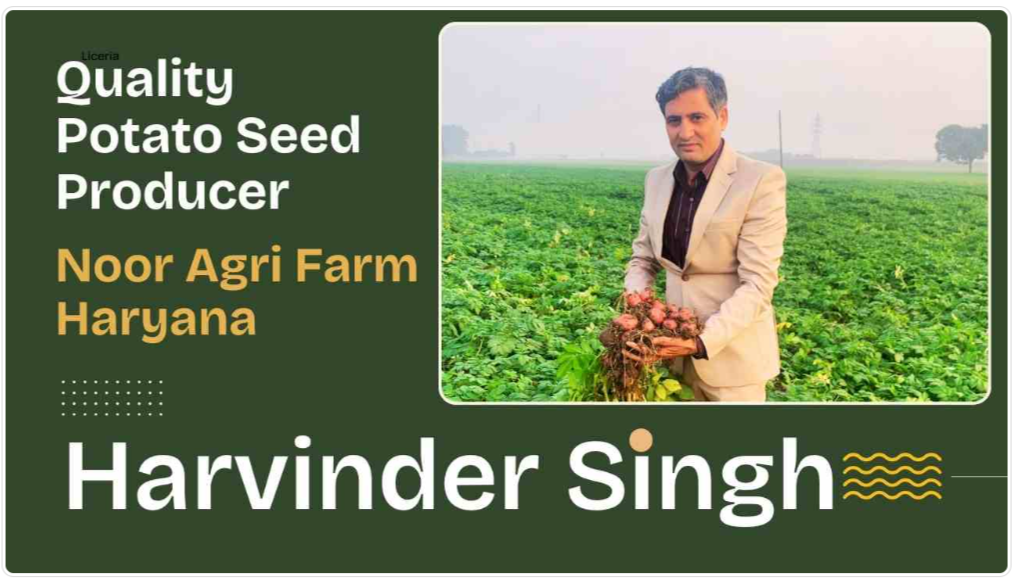
In the heart of India’s agricultural belt, a quiet revolution in potato cultivation is underway. Harvinder Singh, founder of Noor Agri Farm in Haryana’s Kurukshetra district, has demonstrated that the greatest leverage point in agriculture isn’t always scale, but specialization in the right segment of the value chain. His transition from growing table potatoes for local markets to becoming a nationally recognized producer of certified seed potatoes highlights a critical truth: quality inputs are the foundation of agricultural productivity. By focusing exclusively on early-generation seed production across more than 200 acres, Singh has created a business model that delivers superior financial returns while addressing one of Indian agriculture’s most persistent challenges—access to reliable, disease-free planting material.
The Foundation of Success: Quality, Technology, and Collaboration
Singh’s operation stands out for its strategic integration of three key elements that align with global best practices in seed production:
- Early-Generation Seed Focus: The use of minitubers to produce genetically pure, early-generation seed is scientifically proven to maintain varietal integrity and vigor. According to the International Potato Center (CIP), each successive field generation of seed potatoes can accumulate viral loads that reduce yields by 5-10%. By specializing in early generations, Noor Agri Farm provides farmers with planting material that can deliver yield advantages of 25-40% compared to farm-saved seed, which often carries latent diseases.
- Strategic Diversification: By cultivating a diverse portfolio including international varieties like ‘Santana’ and ‘Diamant’ alongside Indian-bred ‘Kufri’ series, Singh mitigates risk and serves different agro-climatic zones and market preferences. This diversity is crucial in an era of climate volatility, as no single variety performs optimally across all stress conditions.
- Technology Adoption and Knowledge Transfer: The implementation of precision irrigation, mechanized planting with GRIMME equipment, and scientific seed grading represents a significant advancement over traditional methods. The FAO estimates that precision agriculture technologies can improve water use efficiency by 20-30% and increase yields by 15-20% through more optimal plant spacing and resource allocation. Furthermore, Singh’s role as a Bayer ambassador and his regular field demonstrations create a powerful extension model, bridging the gap between research institutions and practical farming.
The Ripple Effect: Economic and Environmental Impact
The impact of Singh’s work extends far beyond his farm’s boundaries. When farmers across seven states purchase his quality seeds, they experience multiple benefits:
- Reduced Pesticide Use: Healthy, disease-resistant seed reduces the need for prophylactic chemical applications, lowering production costs and environmental impact.
- Improved Income Stability: Higher and more predictable yields provide greater financial security for thousands of farming families.
- Knowledge Diffusion: The farm serves as a living laboratory where other farmers can witness the tangible benefits of integrated pest management and modern machinery.
A Replicable Model for Agricultural Development
Harvinder Singh’s story offers more than inspiration—it provides a replicable blueprint for agricultural development in emerging economies. His success underscores that the transformation of smallholder agriculture doesn’t necessarily require massive landholdings but rather strategic specialization in high-value segments of the agricultural value chain. By combining quality focus with technological adoption and collaborative partnerships, he has created an enterprise that simultaneously achieves profitability, sustainability, and broad social impact.
For policymakers, Singh’s model highlights the importance of supporting seed system development. For farmers, it demonstrates the economic potential of moving from commodity production to specialized input supply. And for the agricultural scientific community, it shows the powerful impact that occurs when research institutions actively partner with progressive farmers to scale innovations. The Noor Agri Farm story ultimately proves that the most sustainable agricultural revolutions often begin with a single high-quality seed.

