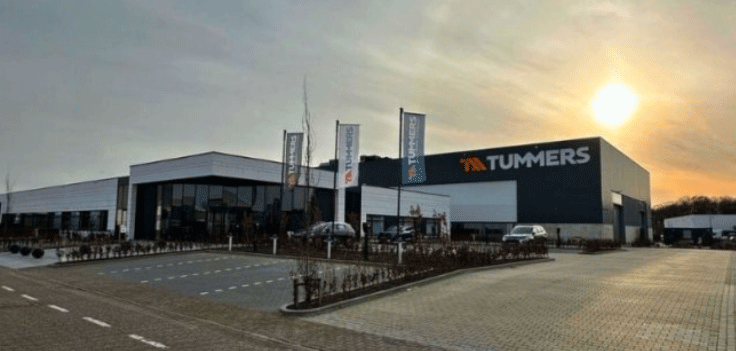
In a strategic move that signals a new direction for industrial agriculture, Dutch equipment specialist Tummers Food Processing Solutions and Belgian thermal energy expert Callens have joined forces. Their goal is to accelerate the development of the Tummers Emission-to-Energy (E2E) concept, a visionary blueprint for potato processing that marries full automation with advanced energy recovery. The alliance aims to push the boundaries of sustainability, targeting the creation of a plant that operates with zero harmful emissions and is entirely self-sufficient in its energy needs.
The core of this initiative is the integration of Callens’ energy systems into the E2E framework to create what the companies term a “dark factory.” This concept envisions a facility capable of autonomous operation using renewable energy, eliminating both emissions and unnecessary energy consumption. This is critically important for an industry under pressure; food processing is typically energy-intensive, with the USDA noting that energy is often the third-highest operational cost after raw materials and labor. By focusing on heat integration and steam management—areas where vast amounts of energy are traditionally lost—the partnership directly addresses this financial and environmental burden. The shared vision, as stated by Callens’ Technical Director Bert De Grys, is to make industrial processes “smarter, greener, and more energy-efficient.”
The Tummers-Callens partnership is more than a corporate collaboration; it is a bold step toward a new paradigm for agricultural processing. For farmers and plant owners, this promises a future with significantly lower operating costs and a stronger sustainability profile. For agronomists and engineers, it highlights the increasing convergence of automation, energy science, and agriculture. This venture demonstrates that the path to net-zero operations is not just a regulatory obligation but a tangible, achievable goal that can drive efficiency and innovation, potentially setting a new global standard for the entire food processing sector.

