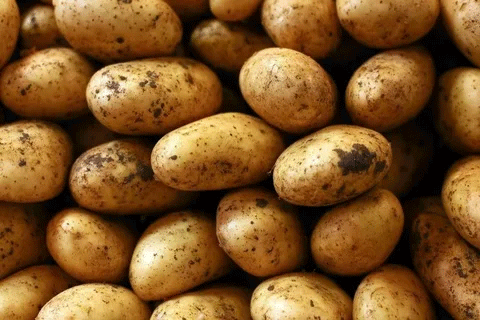
As retail potato prices in Novosibirsk skyrocket past 89 rubles/kg, a crackdown on informal sales creates a complex dilemma for small-scale growers. This article explores the legal tightrope for backyard producers and the broader market forces at play, offering a critical look at informal agricultural economies.
In Novosibirsk, a dramatic surge in potato prices is clashing with stringent regulations on informal trade, placing backyard growers in a difficult position. While retail costs have more than tripled since January 2024, reaching unprecedented levels, local authorities are reinforcing fines of 500-2,000 rubles for individuals selling homegrown potatoes without formal business registration or licenses. This situation highlights a growing tension between economic opportunity for smallholders and the rigid framework of agricultural compliance and food safety laws.
The price data is staggering. According to Novosibirskstat, the average kilogram of potatoes has jumped from 24.60 rubles in January 2024 to 89 rubles in late 2025, representing an increase of over 260% in less than two years. This inflationary pressure creates a powerful incentive for owners of dachas (small garden plots) to sell their surplus, offering consumers a cheaper alternative to expensive retail channels while supplementing their own incomes.
However, this practice operates in a legal gray area. Russian administrative code (Article 14.1) categorizes the regular sale of any agricultural produce without formal registration as illegal entrepreneurship. For context, the World Bank’s 2023 Ease of Doing Business report notes that despite simplifications, the administrative burden and tax implications of formalizing micro-businesses in Russia remain a significant barrier for occasional sellers, pushing many into the informal sector. Furthermore, a 2024 FAO study on global food security emphasizes that informal food networks are crucial for nutritional access and income generation for millions of low-income families worldwide, though they often exist outside official regulatory frameworks.
The situation in Novosibirsk presents a classic agricultural policy dilemma. On one hand, regulating food sales ensures safety standards and fair taxation. On the other, excessive rigidity criminalizes ordinary citizens seeking to mitigate food inflation and earn a modest income from their labor, ultimately stifling local food distribution and potentially exacerbating price volatility by limiting supply sources. For policymakers, the solution may lie in creating simplified, low-cost micro-entrepreneurial statuses for small-scale producers, balancing the need for oversight with economic reality. For farmers and agronomists, this serves as a critical reminder that market access and legal compliance are as important as production itself, and understanding the regulatory landscape is essential for anyone involved in food sales, regardless of scale.

