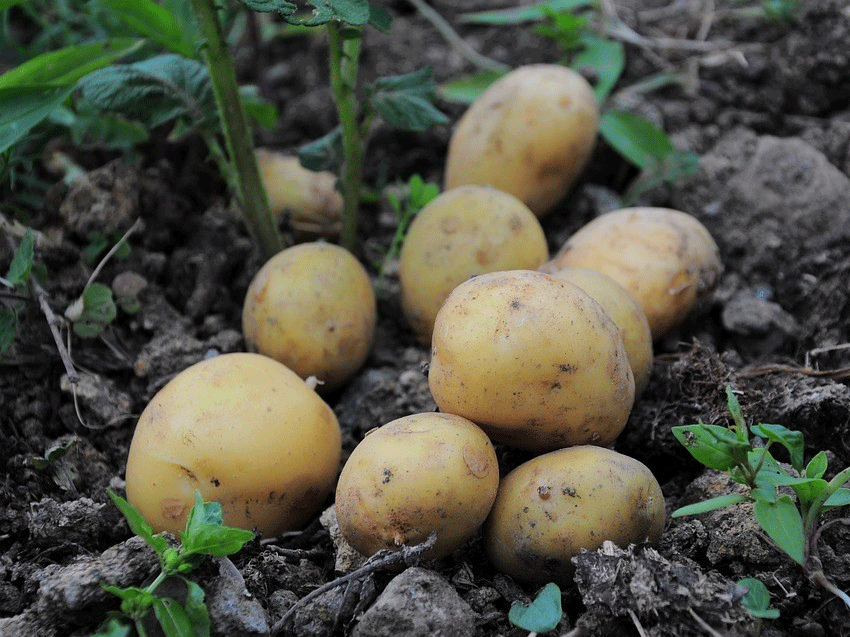
According to the Ministry of Agriculture, Russia has already harvested 240,000 tons of potatoes by mid-July—a 64,000-ton increase (+36%) over the same period in 2023. Leading regions include Astrakhan, Krasnodar, and Stavropol, with active harvesting also underway in Kabardino-Balkaria, Volgograd, and Crimea.
Alexey Krasilnikov, Executive Director of the Potato Union, confirms that the harvest is ahead of schedule, even in Bryansk, where unusually warm March-April weather allowed farmers to plant 2,000 hectares early. However, this accelerated supply has slashed prices: early potato prices have dropped from 70 RUB/kg in early summer to 20-22 RUB/kg, with some batches selling even lower—below production costs for many farmers.
Weather Woes and Export Hurdles
Extreme heat (up to 40-50°C) in southern regions forces farmers to work only between 4 AM and 10 AM, slowing harvest progress. Meanwhile, excessive rainfall in other areas has waterlogged fields, increasing disease risks and delaying machinery access.
Export delays are another major concern. Kazakhstan and Belarus, key buyers of Russian potatoes, are now starting their own harvests, reducing demand. Regulatory approvals for exports only began this week—too late to capitalize on early-season demand.
Domestic Market Challenges: Import Dominance Persists
Despite rising domestic supply, supermarkets still favor imported potatoes from Egypt, Israel, and China, often of lower quality (e.g., sprouted tubers). Russian early potatoes remain scarce on shelves, even as farmers struggle with low prices.
Seeking Solutions: Long-Term Contracts and Policy Support
The Potato Union is pushing for fixed-price contracts with retailers and government support to stabilize the market. The Ministry of Agriculture has already urged supermarkets to prioritize domestic produce, but structural changes are needed to ensure fair pricing and reduce import reliance.
While Russia’s potato harvest is off to a strong start, falling prices, logistical delays, and import competition threaten profitability. Addressing export bottlenecks, improving storage logistics, and strengthening domestic retail partnerships will be crucial for sustaining farmer incomes in this volatile market.

