For nearly eight decades, Herr’s has transformed raw farm commodities into a global snack empire, demonstrating the enduring power of a producer-focused business model. This case study explores how a commitment to quality ingredients and a dedicated workforce, rooted in Pennsylvania’s agricultural heartland, can build a brand that reaches over 37 countries. The journey from a single potato chip recipe to a diverse portfolio highlights key lessons in value-added agriculture and sustainable growth.
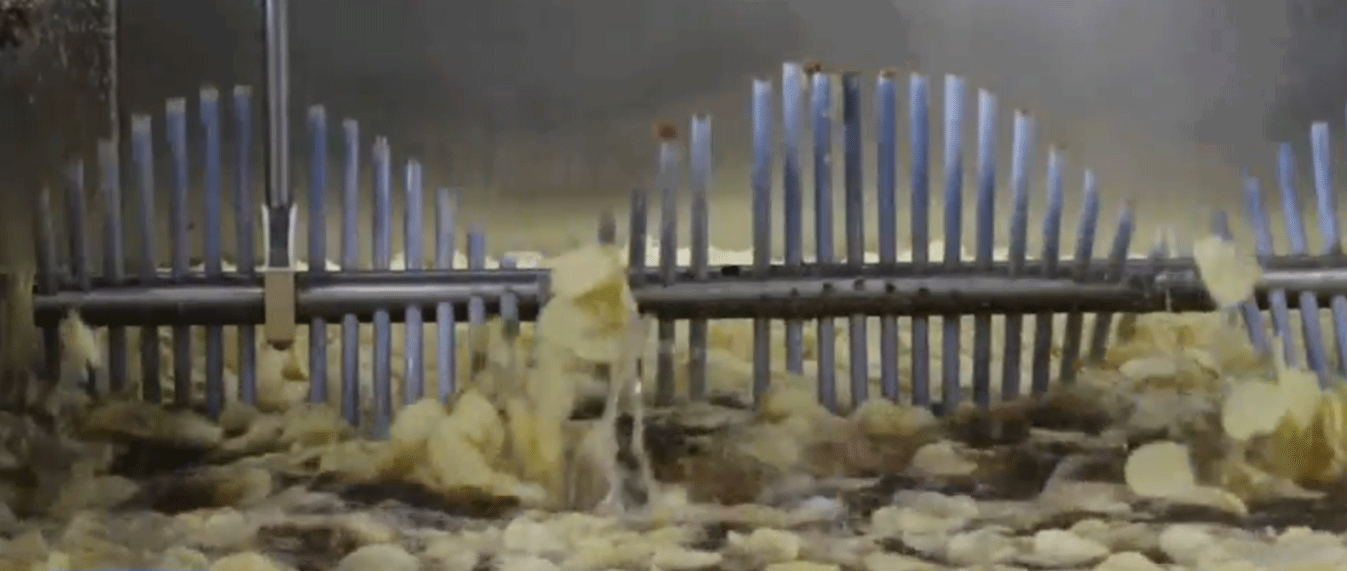
Founded in 1946 by James Herr with the purchase of the tiny Vernice Potato Chips company, Herr’s began with just “two kettles and an old root truck.” Today, the company’s operations have scaled to an industrial level, producing over 300 million bags of snacks annually. This requires a massive and consistent supply of agricultural inputs, primarily potatoes, corn for tortilla chips and popcorn, and dairy for seasonings like their top-selling sour cream and onion. The company’s 24/7 operation, moving produce from conveyor belts through washing, slicing, frying, and seasoning, is a testament to a robust and reliable agricultural supply chain. While specific potato tonnage isn’t disclosed, industry data provides context: producing 300 million bags likely requires a potato harvest from thousands of acres, considering that a single large bag of chips can require over a pound of raw potatoes. This scale underscores Herr’s significant role as a key buyer and stabilizer for local farmers.
The Herr’s story is a powerful example for the agricultural community. It proves that long-term success is built not just on scaling production, but on a foundational commitment to quality inputs—”the best oil” and “high-end branded salt”—and, most importantly, to people. For farmers and agronomists, Herr’s represents a stable, high-volume market for their crops. For agricultural engineers and scientists, its continuous, large-scale processing showcases the engineering and food science required to bring farm products to a global market. Ultimately, Herr’s demonstrates that a business deeply rooted in its local agricultural community can achieve international reach, creating a resilient and profitable model for the entire food production ecosystem.

