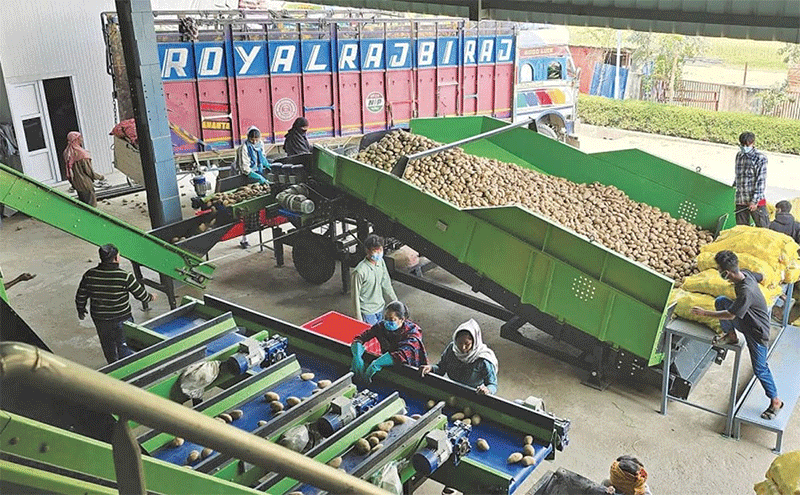
The recent milestone of First Choice Foods (FCF) in Nepal—exporting frozen French fries to the United States—is more than a business headline; it is a masterclass in modern agricultural value chain development. Operating from a 60,000-square-foot facility in Butwal with European technology, FCF has achieved a remarkable 75% import substitution of French fries in the Nepali domestic market within its first year of commercial production. This was the foundational step. The company has now begun its international ascent, with a 41-tonne inaugural shipment to the US, orders for 40 additional containers, and plans to target markets in the UK, Australia, and the Middle East. The strategic shift from a domestic focus to a global one underscores the scalability of the model.
The core of this success lies in its deeply integrated supply chain, which directly links over 35,000 farmers across 26 districts to a high-tech processing plant. FCF provides a holistic support system, including seeds, fertilizers, training, and technical support, while guaranteeing to purchase potatoes directly from the fields. This “closed-loop” system ensures quality control from farm to factory, a critical factor in meeting the stringent US FDA quality standards that enabled the export. This model aligns with global data on agricultural productivity. A 2023 report by the Food and Agriculture Organization (FAO) emphasizes that contract farming and producer linkages with agri-businesses can increase smallholder productivity by up to 30% and significantly reduce post-harvest losses. Furthermore, FCF’s ability to produce two tonnes of French fries per hour and its procurement of over 2,000 tonnes of potatoes annually demonstrate the powerful demand engine that value-added processing creates for local agriculture, turning a perishable commodity into a shelf-stable (18-month life) export product.
The First Choice Foods model proves that the future of competitive agriculture in developing economies is not solely in exporting raw commodities but in capturing the value-added processing segment. For farmers and agricultural professionals, the key takeaway is the transformative power of vertical integration and technology adoption. By creating a direct, supportive link between the farmer and the end-consumer—especially in lucrative international markets—this approach mitigates market risk for growers, ensures a consistent supply of quality raw materials for processors, and builds national economic resilience. It is a powerful blueprint showing that with the right infrastructure, partnerships, and quality focus, local produce can indeed compete on the world stage.

