For farmers, agronomists, and agricultural business owners, the headlines are often dominated by the major global commodities: wheat, corn, and soybeans. However, a closer look at specific bilateral trade data reveals a more nuanced and equally compelling story—one of strategic niche exports creating new revenue streams. A prime example is the burgeoning agricultural trade relationship between Azerbaijan and Belarus.
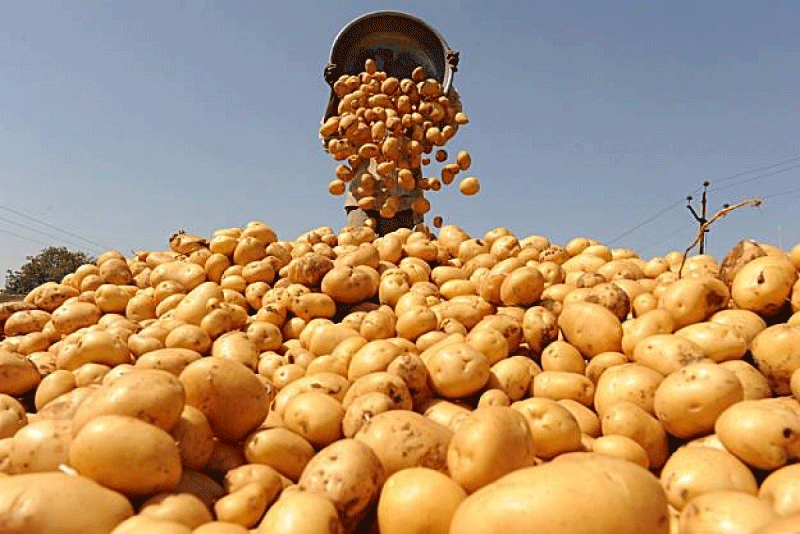
According to official data from Azerbaijan’s State Statistical Committee for the first seven months of 2025, the republic exported a significant 5,692.69 tonnes of potatoes to Belarus, valued at $3.15 million USD. This transaction is far from an isolated incident. It forms part of a diversified export package that included 2,310.3 tonnes of tomatoes, 1,244.65 tonnes of hazelnuts, and 1,059.03 tonnes of persimmons.
This data signifies a strategic move beyond traditional crop models. While Belarus itself is a notable potato producer, this import activity suggests a focus on counter-seasonality, specific varieties, or quality attributes that Azerbaijani producers can fulfill. It underscores a critical lesson for the global agricultural sector: success is increasingly defined by identifying and capitalizing on specific market gaps rather than just maximizing yield of staple crops.
The Global Context: The Rising Value of Specialized Crops
The strategic export of high-value crops like hazelnuts and persimmons by Azerbaijan aligns with global market trends. The global hazelnut market, for instance, is projected to grow from USD 7.92 billion in 2024 to USD 10.61 billion by 2029, demonstrating a steady compound annual growth rate (CAGR) of 6.00% (Source: Mordor Intelligence). This growth is driven by rising demand from the confectionery and snack industries. Similarly, the global persimmon market is experiencing growth, fueled by increasing consumer awareness of its nutritional benefits.
For farmers and farm owners, this signals a potential pivot point. Diversification into such high-demand, value-added specialty crops can de-risk operations that are overly reliant on volatile commodity markets. For agronomists and agricultural engineers, it presents new challenges and opportunities in optimizing post-harvest technology, cold chain logistics, and quality control to meet international standards and preserve product integrity over long supply chains.
The $3.15 million potato deal between Azerbaijan and Belarus is more than just a trade statistic; it is a case study in modern agricultural strategy. It highlights the critical importance of market intelligence, supply chain reliability, and crop diversification. In an increasingly interconnected world, the profitability of a farm or a nation’s agricultural sector will depend not only on what is grown but also on a sophisticated understanding of when, where, and how to sell it. The future belongs to those who can efficiently produce staple commodities while also strategically cultivating niche products for specific, high-value international markets.

