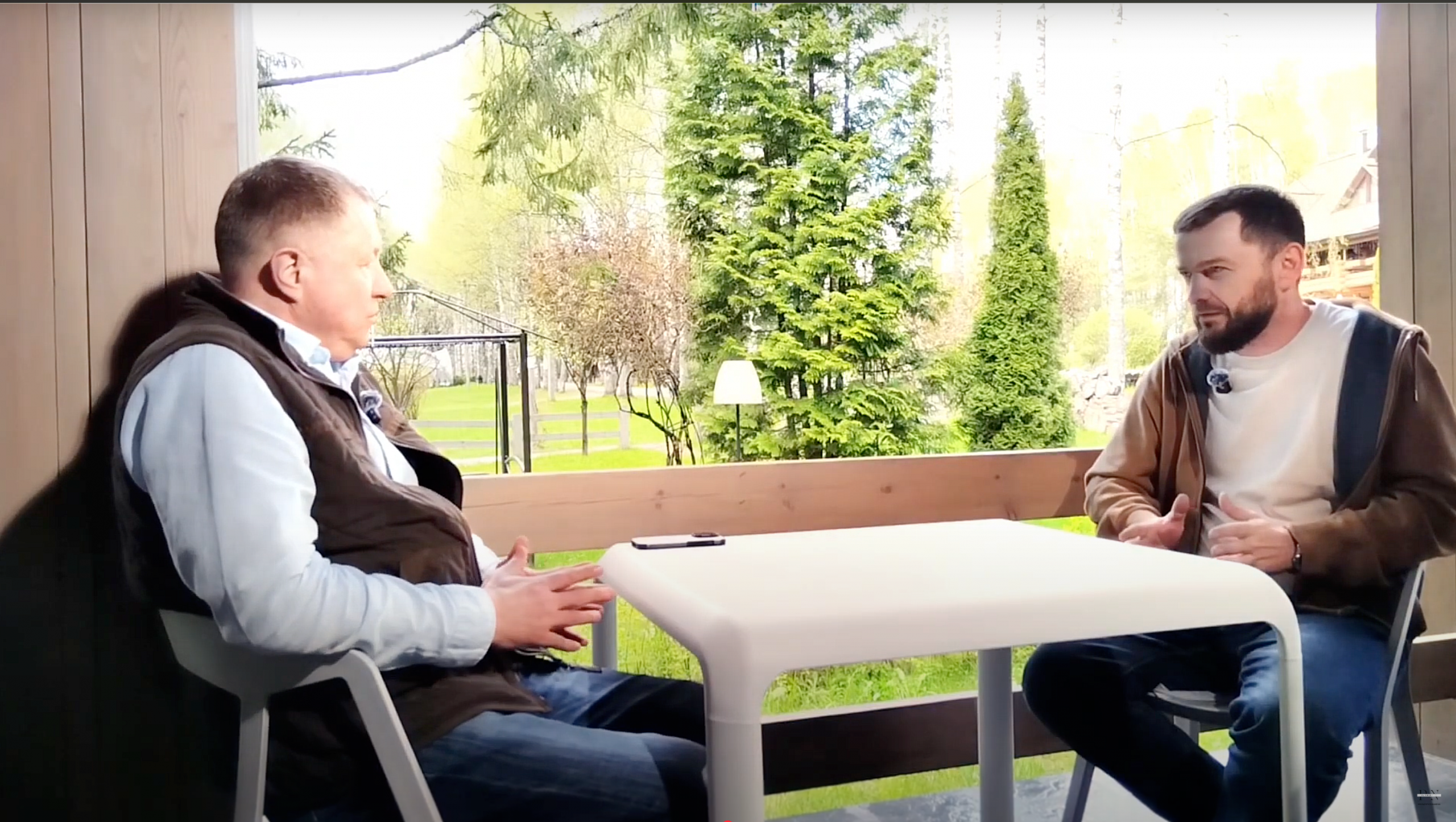
Interview with Alexander A. Pilipchuk (Kostroma/Yaroslavl, Russia)
What’s inside. How do you build a resilient seed business in Russia by relying on “semi-classical” agronomy rather than buzzwords? Founder of “Kostroma Potato” Alexander Pilipchuk traces the path from importing NORIKA varieties to in-country multiplication, explains prices and risks in 2025, land and labor bottlenecks, and why colorful exotics are nice—but economics come first.

At a glance
- Origins. Since 2000, “Norikoslavia” handled imports/registration of NORIKA varieties; Gala became one of the commercial hits.
- Today. Sites in Kostroma & Yaroslavl regions: 3 storages, 500–550 ha of high-generation seed potatoes.
- Sales model. 70% contract growing, 30% own sales (incl. licensed Gala, Elite/first reproduction).
- Team. ~50 core staff + ~100 seasonal; targeted student training.
Technology
- Proven, “semi-classical” approach (no radical no-till): careful tillage/ridging, disciplined agronomy.
- Self-propelled harvester, elements of precision ag—used pragmatically.
- Seed goal: ~80% seed fraction; early haulm desiccation to stop growth.
- Peak outcomes are possible: in 2019 certain seed fields produced >50 t/ha of seed fraction under optimal conditions.
Season 2025
- May 15: ~20% planted; frequent rains kept some farms out of fields.
- Winter came almost without snow/frost, spring brought excess rainfall—true impacts will show later.
Market & economics
- Table potato prices look high, but seed hasn’t surged the same way while costs climbed for everyone.
- For newcomers: this is not a quick-money business. Start with quality seed, cut per-hectare costs, maximize the seed fraction—and secure offtake.
Land & infrastructure
- Key pain point: land near facilities. Bringing abandoned plots back into rotation is long and costly.
- Plans: stabilize at 500–600 ha, finish storages/site upgrades, and expand land bank prudently.
- Support exists (per-ha, machinery), but policy priorities shift; timing is tough for farms.
Portfolio & exotics
- Roughly 50/50 table vs. processing; recent years—more processing varieties.
- Multi-colored exotics are beautiful but niche: the team is open to large confirmed orders (e.g., 1,000 t of seed).
People
- Typical shortages: agronomists, operators, electricians, general labor.
- The company invests in targeted student pipelines plus seasonal crews.
“The hardest part over 25 years is never relaxing. A good year tricks you into thinking you know it all—then the next season rewrites the script.”
Prepared as part of the International Potato Tour (Международный картофельный тур)—a series of field stories and interviews about the people, technologies, and markets of potatoes.