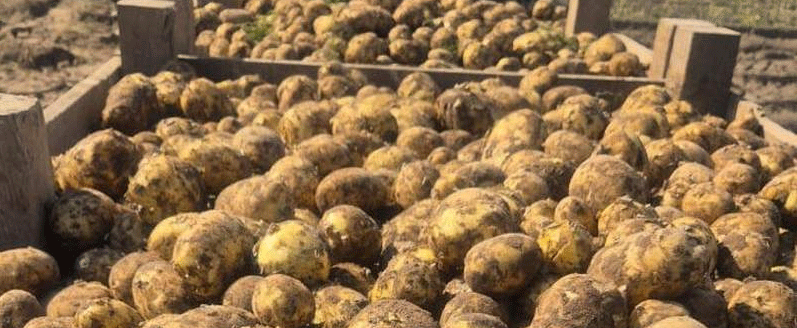
Official data from a regional government meeting on October 7, 2025, has revealed a significant agricultural shortfall. With only 38% of the potato area harvested, the region has collected 56,000 tonnes, a notable drop from the 63,000 tonnes recorded at the same time in 2024. More critically, the regional Minister of Agriculture, Artyom Ivanov, stated that the gross harvest of food potatoes has fallen by almost 38% year-on-year. The distribution of the current harvest is particularly telling: of the 56,000 tonnes, only 25,000 tonnes are slated for the fresh market, with the remainder—over 55% of the harvest—being directed to processing plants owned by “Atlantis.” This indicates not only a yield reduction but a severe contraction in the supply of table stock, likely due to quality issues that render a large portion of the crop suitable only for industrial uses.
In response, Governor Alexey Besprozvannykh has instructed the ministry to assess the potential for a potato deficit and to develop a plan to replenish supplies preemptively, rather than waiting for shelves to empty. The proposed solution involves potential imports from Belarusian partners, who have reportedly indicated that their potato and vegetable supplies are stable despite their own challenging season. This move towards international procurement underscores the regional nature of agricultural disruptions and the increasing reliance on trade to ensure food security. This scenario is not isolated; similar climate-driven volatilities have been reported across Europe in recent years, affecting both yield and tuber quality, and forcing a re-evaluation of regional self-sufficiency models.
The situation in this Russian region serves as a stark reminder of the interconnected challenges facing modern potato production. Climate volatility is directly impacting yields and quality, leading to a smaller proportion of the harvest meeting the standards for the fresh market and a greater reliance on the processing sector to absorb the remainder. For industry professionals, this highlights the critical need for strategies that enhance resilience, including the adoption of climate-adaptive varieties, improved water management, and robust post-harvest handling. Furthermore, it demonstrates the growing importance of diversified supply chains and international trade partnerships as a buffer against localized production crises.

