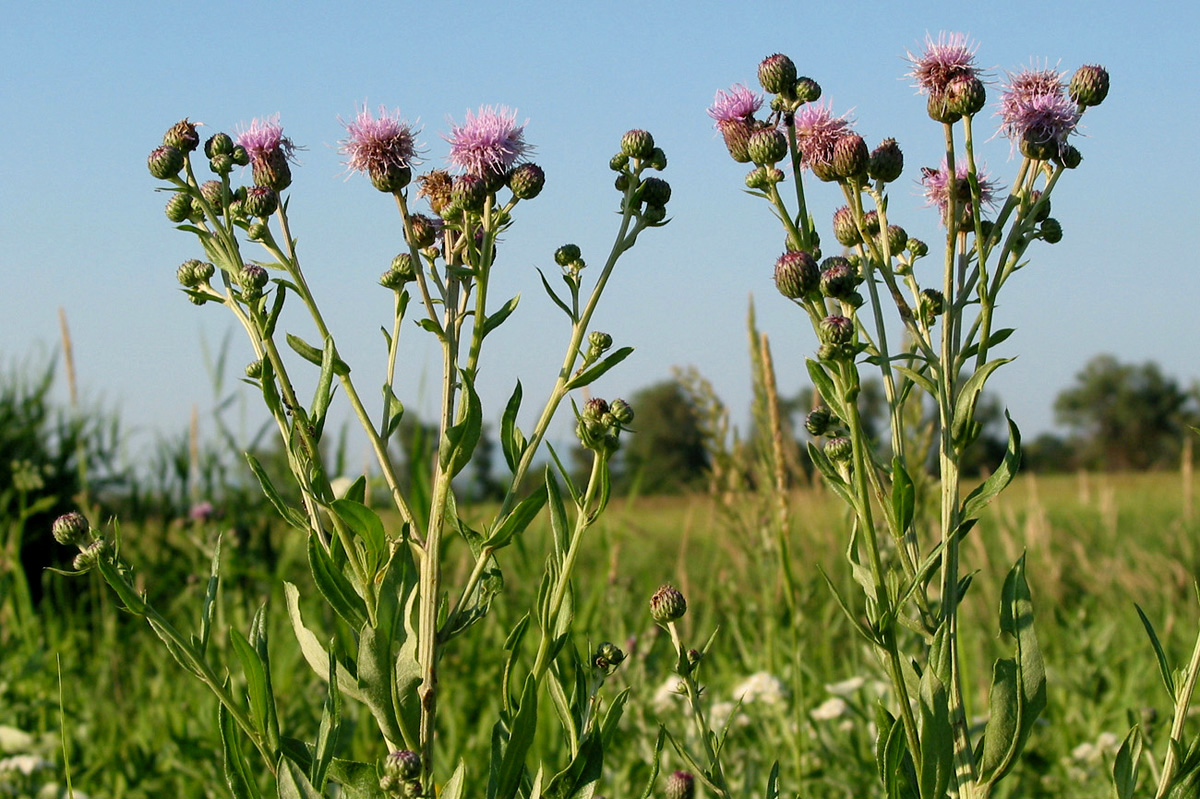
#InvasiveSpeciesAlert #CirsiumArvense #CanadaThistle #Biodiversity #Agriculture #Ecology #ControlMethods #PreventativeMeasures #HumanActivities #EconomicImpact
Cirsium arvense, commonly known as Canada thistle, is an invasive weed species that can wreak havoc on ecosystems and agriculture. Originally from Eurasia, it was brought to North America in the 1600s and has since spread rapidly across the continent. This article will explore the development and consequences of the spread of Cirsium arvense and the steps that can be taken to control it.
Cirsium arvense can quickly take over an area, outcompeting native plants and reducing biodiversity. Its deep root system also makes it difficult to control, as it can resprout from small fragments of root left in the soil. In agricultural areas, Cirsium arvense can reduce crop yields and quality, making it a significant economic threat.
The spread of Cirsium arvense has been facilitated by human activities such as transportation and land use changes. Once established, it can be challenging to eradicate. However, there are several methods for controlling its spread, including mechanical and chemical methods. Preventative measures, such as minimizing soil disturbance and planting native species, can also help reduce its impact.
The consequences of the spread of Cirsium arvense can be severe, including reduced biodiversity and negative economic impacts. It is crucial that steps are taken to control its spread and prevent its introduction into new areas.
In conclusion, Cirsium arvense is a highly invasive species that poses a significant threat to ecosystems and agriculture. Its spread has been facilitated by human activities, and it is challenging to eradicate once established. However, there are methods for controlling its spread, and preventative measures can be taken to reduce its impact. It is crucial that action is taken to prevent the further spread of Cirsium arvense and protect our natural resources.