• Latest
  • Trending
  • All
  • News
  • Business
  • Politics
  • Science
  • World
  • Lifestyle
  • Tech
specific resistance genes

Researchers map late blight potato strains on Java, Indonesia

16.12.2020
Simplex: Eight Years of Building Fertilizers from Scratch — Russian Science Meets Growers’ Real Needs

Simplex: Eight Years of Building Fertilizers from Scratch — Russian Science Meets Growers’ Real Needs

13.06.2026
Russian Fertilizer Producers Shift Strategy Toward Direct-to-Consumer Sales

Russian Fertilizer Producers Shift Strategy Toward Direct-to-Consumer Sales

13.06.2026
Fertilizer Prices Rise 8% in Krasnodar Krai as Gardeners Shift to Premium Products

Fertilizer Prices Rise 8% in Krasnodar Krai as Gardeners Shift to Premium Products

13.06.2026
Country-Style Potatoes: A Nostalgic One-Pan Recipe for Breakfast or Dinner

Country-Style Potatoes: A Nostalgic One-Pan Recipe for Breakfast or Dinner

13.06.2026
Как вырастить элитный картофель в Приморье? Опыт Дальневосточного центра селекции и семеноводства

From Soviet Roots to High-Tech Hubs: How the Russian Far East is Redefining Potato Farming

12.06.2026
McCain Foods to Become Official French Fry Partner of Tour de France in 2026

McCain Foods to Become Official French Fry Partner of Tour de France in 2026

12.06.2026
Nanjing Hosts First Potato Festival by the Qinhuai River Celebrating International Potato Day

Nanjing Hosts First Potato Festival by the Qinhuai River Celebrating International Potato Day

12.06.2026
“Western Taro”: Ningbo’s Flat Potato Dish – A Taste of Childhood and Homesickness

“Western Taro”: Ningbo’s Flat Potato Dish – A Taste of Childhood and Homesickness

11.06.2026
From “Food of Lepers” to Global Staple: The 500-Year Triumph of the Potato

From “Food of Lepers” to Global Staple: The 500-Year Triumph of the Potato

11.06.2026
Dry Harvest and Extended Storage Create “Perfect Conditions” for Potato Diseases

Dry Harvest and Extended Storage Create “Perfect Conditions” for Potato Diseases

11.06.2026
French Sustainability Rules Risk Pushing Belgian Potato and Vegetable Processors Out of the Market

French Sustainability Rules Risk Pushing Belgian Potato and Vegetable Processors Out of the Market

10.06.2026
Dutch Farmer Harvests First Early Potatoes of the Season for Alvantho Auction

Dutch Farmer Harvests First Early Potatoes of the Season for Alvantho Auction

10.06.2026
  • Home
  • IPT
    • POTATO 2.0
  • News
  • AGROTECHNOLOGY
  • IRRIGATION
  • About Us
    • Contact us
Saturday, June 13, 2026
  • Login
POTATOES NEWS
  • Home
  • IPT
    • POTATO 2.0
  • News
  • AGROTECHNOLOGY
  • IRRIGATION
  • About Us
    • Contact us
No Result
View All Result
POTATOES NEWS
No Result
View All Result
Home AGROTECHNOLOGY

Researchers map late blight potato strains on Java, Indonesia

by Alexey Demin
16.12.2020
in AGROTECHNOLOGY
0
specific resistance genes
642
SHARES
1.8k
VIEWS
Share on LinkedInShare on ВКонтакте

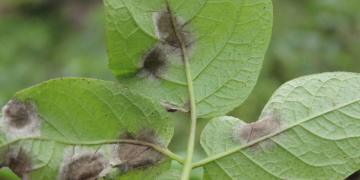
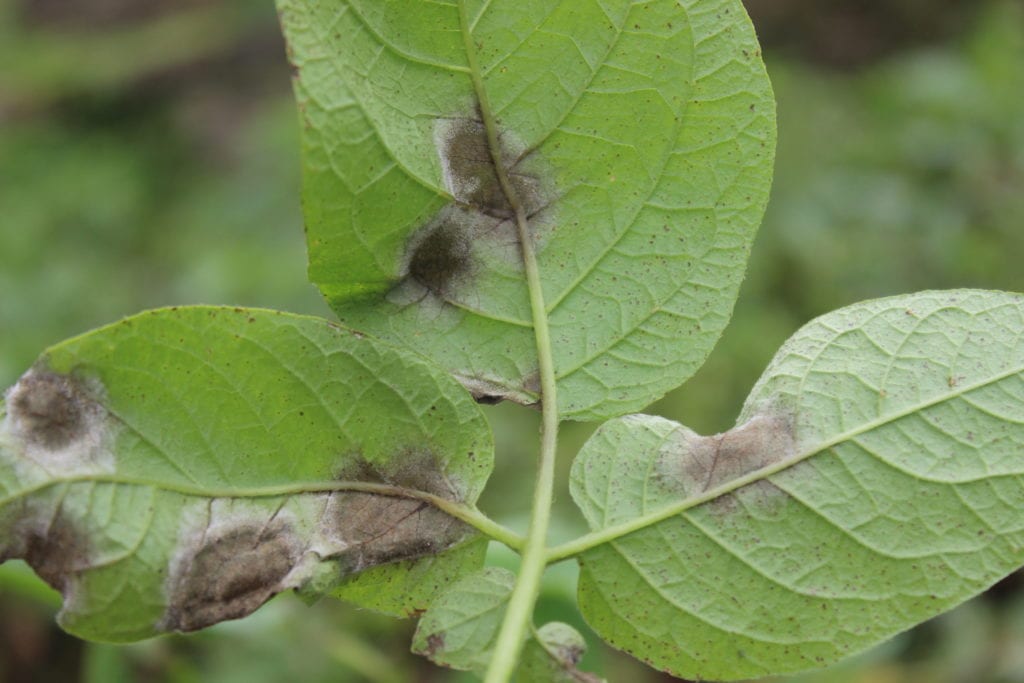
A new study published in Plant Pathology identifies for the first time the genotypes of P. infestans, causing late blight in the main potato-growing regions in Java, Indonesia.

Potato late blight disease is credited as the cause of the great Irish potato famine of 1845. It has been called the worst of all diseases known to potato. Farmers hope for effective and durable late blight solutions as researchers continue to study and understand Phytophthora infestans, the fungus-like microorganism that causes the disease.

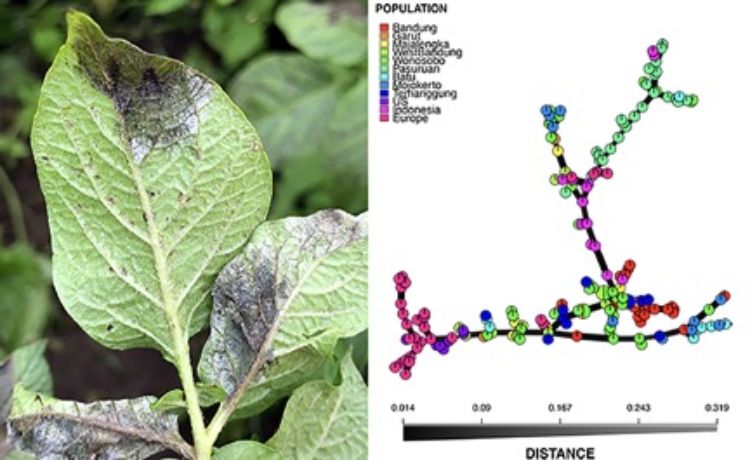
 A new study, Genotypic and phenotypic characterization of Phytophthora infestans populations on Java, Indonesia, published in Plant Pathology identifies for the first time the genotypes, or strains of P. infestans, causing late blight in the main potato-growing regions on the island of Java in Indonesia and secondly, examines the diversity in the genetic makeup in the P. infestans populations in those regions.

“Researchers are using breeding technologies to develop solutions that provide resistance to P. infestans. So, understanding the genotypes and genotypic diversity of the pathogen and how they evolve is key to achieving lasting, durable resistance to the disease,” notes Dr. Phillip Wharton, Associate Professor in the College of Agriculture and Life Sciences at the University of Idaho and lead author of the publication.

 U.S. researchers from the University of Idaho, University of Minnesota, and Michigan State University collaborated with colleagues from the Indonesian Center for Agricultural Biotechnology and Genetic Resources Research and Development (ICABIOGRAD) to collect and study P. infestans samples over a four-year span (2016-19) from 15 locations in nine regencies on Java, Indonesia. Microsatellite analysis revealed that late blight outbreaks in these regencies were caused by EU_2_A1, a European genotype, and other genotypes that are closely related to EU_2_A1 but unique to Indonesia.

These results suggest that the original genotype introduced into Indonesia was probably EU_2_A1 and that there is ongoing evolution in these populations due to a high mutation rate and no selection pressure from the susceptible potato hosts that are currently being grown in Indonesia.
The research team is part of the Feed the Future Biotechnology Potato Partnership (BPP). Led by Michigan State University, the project aims to bring genetically engineered late blight resistant potato to smallholder farmers in Bangladesh and Indonesia.

The development of genetically modified potatoes is a multi-step process where specific gene(s) are inserted into the genome of the desired potato variety. The protein expression of the gene(s) in the plant can result in changes in the way the plant reacts to stressors such as infection by a pathogen. In this project, three genes from wild potato species that are known to provide natural resistance to late blight disease are inserted in farmer and consumer preferred varieties. The result is a preferred potato variety that has durable disease protection.

Benefits of the late blight resistant potato include reduction in exposure to chemical fungicides. Wharton estimates that current chemical fungicide spraying used to control late blight could be reduced by up to 90%. “This dramatically reduces farmers and their families direct contact with synthetic chemicals which are often applied weekly throughout the growing season and often without personal protective equipment leaving residue on themselves, in the soil and on the potatoes,” explains Wharton. “Less fungicide application equals less synthetic chemical exposure to growers, consumers and the environment.”

Solving the late blight problem may also lead to less post-harvest loss and increased yield. Early results of confined field trials with three gene late blight resistant potatoes in Indonesia appear to show that there is a correlation between absence of the disease and greater yields.

“Although a lot more research needs to be done, early indication is that a late blight resistant potato could also benefit a growing population with higher crop output,” says Wharton. With global population projected to exceed nine billion by 2050 and many more mouths to feed, this is positive news.

Wharton and the Biotechnology Potato Partnership team, who he has nicknamed the late blight hunters, have conducted similar P. infestans surveys throughout Bangladesh, the project’s other geographic focus. Results of those surveys are expected to be published soon.

late blight potato

news/agronomy/

Tags: disease managementpotato diseases or defects
Share45Share32
Alexey Demin

Alexey Demin

  • Trending
  • Comments
  • Latest
Subway launches Spudway: a new era of hot baked potatoes

Subway launches Spudway: a new era of hot baked potatoes

26.02.2025
Processing and Packaging Equipment supplier tna expands manufacturing in the Netherlands

Processing and Packaging Equipment supplier tna expands manufacturing in the Netherlands

22.04.2021
Arby’s Brings Potato Cakes Back to the Menu with Legal Protection to Keep Them From Extinct

Arby’s Brings Potato Cakes Back to the Menu with Legal Protection to Keep Them From Extinct

05.03.2025
Aviko Belgium orders peace of mind

Aviko Belgium orders peace of mind

0
Potato crops at risk of disease during slower desiccation

Potato crops at risk of disease during slower desiccation

0
GRIMME Technica will not take place

GRIMME Technica will not take place

0
Simplex: Eight Years of Building Fertilizers from Scratch — Russian Science Meets Growers’ Real Needs

Simplex: Eight Years of Building Fertilizers from Scratch — Russian Science Meets Growers’ Real Needs

13.06.2026
Russian Fertilizer Producers Shift Strategy Toward Direct-to-Consumer Sales

Russian Fertilizer Producers Shift Strategy Toward Direct-to-Consumer Sales

13.06.2026
Fertilizer Prices Rise 8% in Krasnodar Krai as Gardeners Shift to Premium Products

Fertilizer Prices Rise 8% in Krasnodar Krai as Gardeners Shift to Premium Products

13.06.2026
BE PROFY IN POTATOES NEWS

Copyright © 2010-2026 POTATOES NEWS.

Navigate Site

  • Home
  • IPT
  • News
  • AGROTECHNOLOGY
  • IRRIGATION
  • About Us

Follow Us

Welcome Back!

Login to your account below

Forgotten Password?

Retrieve your password

Please enter your username or email address to reset your password.

Log In
No Result
View All Result
  • Home
  • IPT
    • POTATO 2.0
  • News
  • AGROTECHNOLOGY
  • IRRIGATION
  • About Us
    • Contact us

Copyright © 2010-2026 POTATOES NEWS.