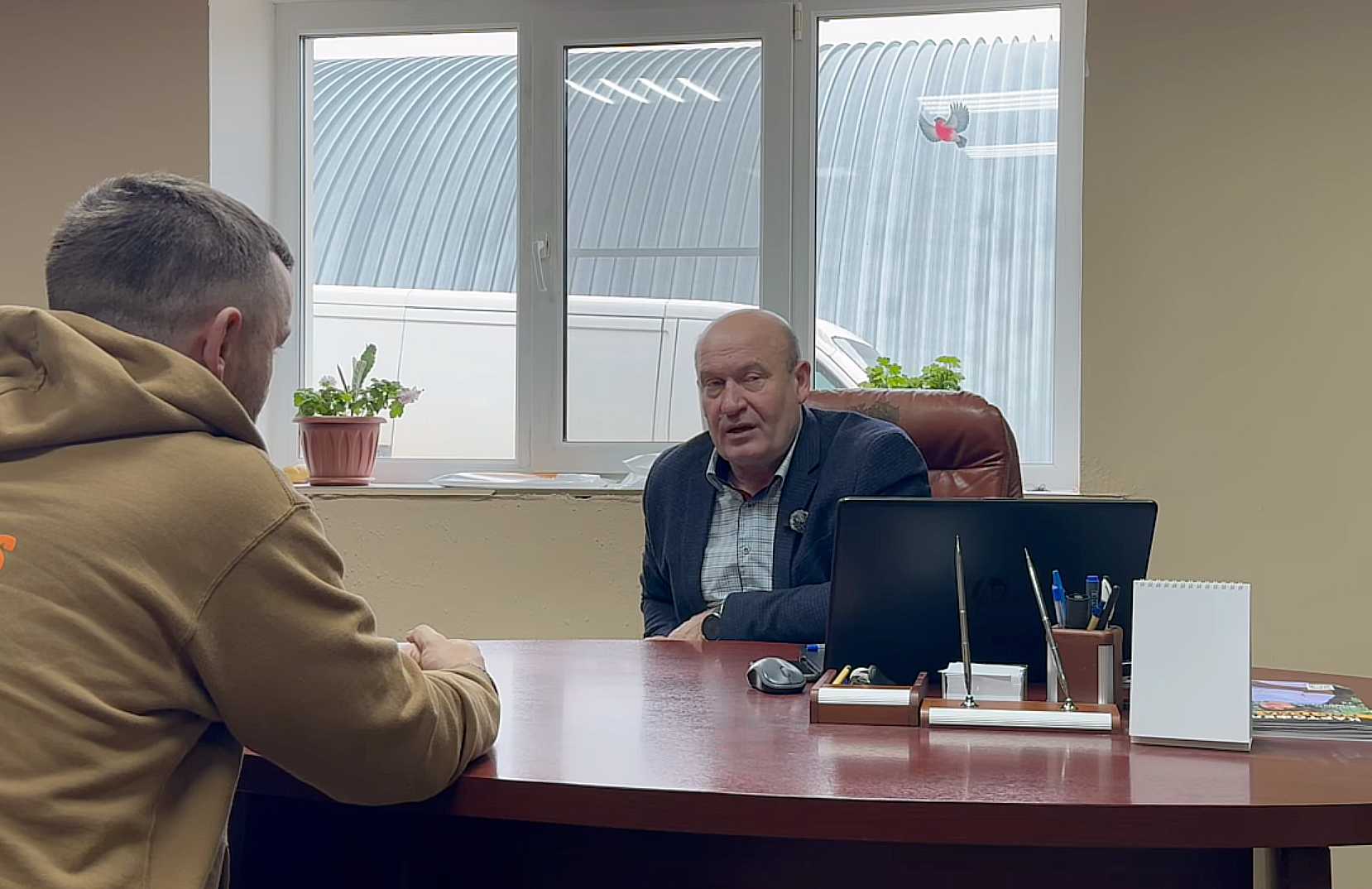
A “Potato Tour across Russia” visit to Moscow Oblast. Conversation with Valentin Kozlov

Valmix is a rare example on the Russian market of a pure seed operation that has been built methodically for over a decade and today relies on 500 ha of seed plantings, its own tissue-culture lab, and partnerships with top processors. During our visit to Moscow Oblast, company head Valentin Kozlov spoke about Valmix’s history, operating model, and development plans.
From “Heroes of Socialist Labor” to entrepreneurship
“In Soviet times you could be named a Hero of Socialist Labor for 40 t/ha. The technologies and seeds were different—that’s how we were taught,” Valentin recalls. The turning point came in the 1990s: mini-tubers, early labs, contact with foreign consultants, and strict agronomic discipline showed that potatoes could be a business. Dmitrov District, where Dutch farmers arrived in the late 1980s and international experts later worked, became one of the gateways for a modern market approach.
The birth and growth of Valmix
Kozlov launched his own project in 2011. Starting with leased, older storages and 50 ha, the team reinvested profits in infrastructure year after year. “For the first ten years we paid no dividends—everything went back into development,” he says. In 2024 the company purchased 1,700 ha of land (about 400 ha still need clearing and rotation entry). In 2025 Valmix is opening a new office and continuing to build out its production site with workshops, a grain warehouse, and a greenhouse complex.
Pure seed production and a processor focus
Today Valmix is a “pure seed” company, holding roughly 7–10% (depending on the year) of certified seed volume in Russia. Over 50% of its portfolio is geared to processing—supplying WeFry. The table segment develops via Norika and HZPC Sadok, but its share is gradually shrinking due to heavy competition and volatile prices. “Our goal isn’t hype, it’s consistently high quality. Maybe not record-breaking, but no slumps,” Kozlov stresses.
The key to consistency is an in-house foundation. The lab is now in its third year; greenhouses are being expanded. Annual output is about 500,000 mini-tubers, with plans to increase and to segregate a clean corridor for high generations. Box (container) storage, a small line for 5–10 t batches, and tight shipping schedules—all are tailored to seed business demands and processor customers. A telling result from last season: about 2,300 t of super-elite (SE) seed, virus-free, generated half of revenue, while total seed sales were ~7,500 t.
Partnerships and the long game
Valmix’s story is also one of partnerships: from early work with European breeders (including Norika and promoting their varieties in Russia) to the first plantings of processing types even before local plants were built. “With companies like WeFry, it’s comfortable: agreements are kept to the day—both timelines and payments. For a seed grower that’s critical,” Kozlov notes.
People make the difference
Despite all the technology, the main shortage is people. “Today the most expensive resource is talent: operators, agronomists, technologists. An owner can’t ‘file a resignation and leave’—it’s a long road. That’s why we think about succession: my son Andrey works in the company, and for us that’s a guarantee the business will continue,” he says.
Rotation and infrastructure
Cereals and rapeseed are treated as rotation instruments, not standalone businesses: “Any activity should at least not generate losses—that’s why we’re building a grain-handling complex and doing things ‘properly,’ even if it serves only the potato arm.” This autumn the company plans to sow 200 ha of rapeseed on developed plots, while preparing additional contours for future seed fields.
Five-year plans
The next five years are about “bringing the site to perfection”: stabilizing quality at 500 ha, finishing the high-generation corridor with dedicated machinery and staff, strengthening the lab and greenhouses, and building one more storage. Beyond that—finding a “passion-driven” breeder and gradually forming a small, family-style breeding program atop the established seed platform. “When the business is stable and brings satisfaction, it’s natural to move into creativity—breeding is exactly that,” Kozlov sums up.
Quote
“Fifty percent of success in potato growing is seed. Consistent quality matters more than one-off records.” — Valentin Kozlov, Valmix (LLC “Valmex”)
At a glance
- Region: Moscow Oblast
- Profile: seed potatoes (box storage, own tissue-culture lab and greenhouses)
- Seed area: ~500 ha
- Land bank: ~1,700 ha (purchased in 2024)
- Key channels: processing (WeFry); table market (Norika, HZPC Sadok)
- Mini-tuber production: ~500k/year, expanding
Prepared as part of the “Potato Tour across Russia” project.