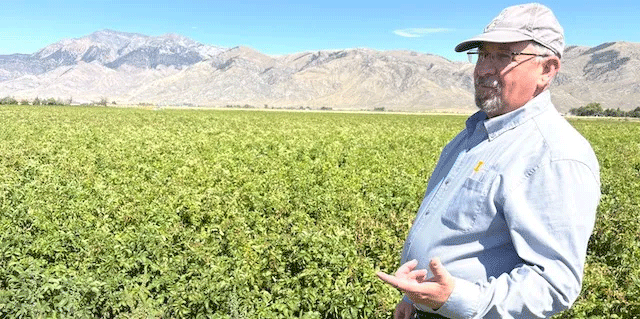
For potato growers and agronomists in Eastern Idaho, the 2025 growing season is presenting a significant challenge. Researchers with the University of Idaho Extension have documented that aphid pressure is not only higher than previous years but also arrived earlier, creating a prolonged window of risk for the transmission of Potato Virus Y (PVY). The virus, which can cause tuber necrosis and plant death, is a primary concern for seed potato producers, whose livelihoods depend on maintaining low virus titers.
The UI Extension’s aphid monitoring network, consisting of 23 yellow bucket traps across six counties (Butte, Caribou, Fremont, Lincoln, Minidoka, and Teton), provides weekly surveillance from mid-June to mid-September. The data reveals a critical shift in 2025. Unlike the 2024 season, which saw low pressure in June and July with a peak in August—resulting in relatively low PVY infection—the summer of 2025 has been marked by “unusually high and sustained” aphid counts throughout the critical month of July. This timing is particularly alarming. As emphasized by UI Extension seed potato pathologist Kasia Duellman, heavy aphid exposure from June through July poses a far greater threat of PVY transmission than later-season exposure, as potatoes appear to develop some resistance as they mature. This trend is not isolated to Idaho; entomologists in other major potato-growing regions have noted similar patterns of increasing aphid vectored-disease pressure, often linking it to milder winters and earlier springs, which allow aphid populations to establish and build more quickly.
The direct impact of this year’s aphid activity on PVY levels in the seed crop won’t be fully known until UI trials are evaluated next spring. However, the monitoring data provides a crucial early warning system. By tracking the timing and intensity of aphid flights, the network allows growers to move from a calendar-based spray schedule to a risk-based Integrated Pest Management (IPM) strategy. As Duellman notes, a peak flight in June, right after crop emergence, is a clear signal for growers to be “more prepared to start applying a mineral-oil-plus-insecticide program” proactively. The long-term vision of the program is to build a predictive model that reliably connects aphid population dynamics with PVY risk, a goal that requires continued data collection and industry collaboration.
The elevated and early aphid pressure witnessed in 2025 serves as a stark reminder of the dynamic threats facing modern potato production. Proactive, data-driven monitoring is no longer a luxury but a necessity for effective crop protection. By leveraging real-time aphid flight data and understanding the heightened risk of early-season PVY transmission, growers, agronomists, and farm owners can make more informed, timely, and economically sound decisions to safeguard their seed and commercial potato crops.

