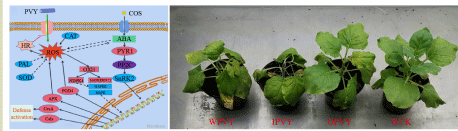
In a significant advancement for sustainable agriculture, researchers from Guizhou University have decoded how oligochitosan (COS), a biological plant immune inducer, activates defense mechanisms against Potato Virus Y (PVY). Their findings, published in Frontiers of Agricultural Science and Engineering, demonstrate that COS at a concentration of 100 μg/mL achieves a 54.7% preventive efficacy against PVY infection. This level of protection is particularly noteworthy given PVY’s devastating impact—this virus causes estimated yield losses of 20-80% in potato crops worldwide, making it one of the most economically damaging pathogens in agriculture, especially in developing countries where control options are limited.
The Molecular Mechanism: From Treatment to Protection
The research team, led by Academician Baoan Song, employed a comprehensive approach to unravel exactly how COS protects plants. Their biochemical analysis revealed that COS treatment enhances the activity of key defense enzymes: catalase (CAT), peroxidase (POD), phenylalanine ammonia-lyase (PAL), and superoxide dismutase (SOD). These enzymes collectively strengthen the plant’s antioxidant system and reinforce cell walls against pathogen invasion. More importantly, integrated transcriptomic and proteomic analyses identified the specific signaling pathway involved: COS treatment activates the MAPK signaling cascade through upregulation of the OXI1 gene, which in turn promotes expression of MAPKKK21 and NDPK4.
The critical role of OXI1 was confirmed through genetic experiments. Plants engineered to overexpress OXI1 showed 40% reduced expression of the PVY coat protein and significantly milder symptoms after infection. Conversely, plants with silenced OXI1 expression demonstrated 112% increased PVY coat protein expression, confirming this gene’s pivotal role in mediating COS-induced resistance. This represents a major breakthrough in understanding plant immunity mechanisms and provides a clear target for future breeding and biotechnology applications.
A Paradigm Shift in Viral Disease Management
This research represents more than just a scientific discovery—it offers a practical pathway toward more sustainable crop protection. By elucidating the precise molecular mechanism through which oligochitosan induces PVY resistance, the study provides the foundation for developing effective, environmentally friendly alternatives to chemical pesticides. For potato and tobacco farmers facing PVY challenges, this could translate to reduced crop losses, lower production costs, and decreased environmental impact.
The implications extend beyond PVY control, as the identified OXI1-MAPK signaling pathway may represent a universal defense mechanism that could be harnessed against other viral pathogens. As agriculture continues to move toward more sustainable practices, such biological inducers offer the dual benefit of effective disease management while aligning with consumer demands for reduced chemical residues and environmental protection. This research marks an important step toward making “green” crop protection not just an ideal, but a practical reality for farmers worldwide.

