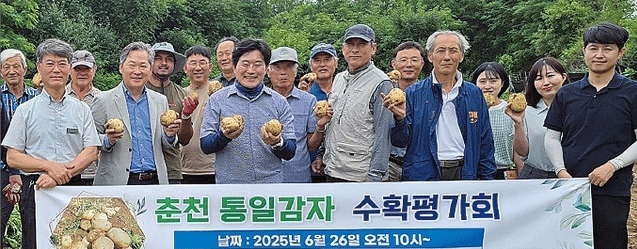
Potato farmers in Gangwon Province, particularly in Chuncheon, have long relied on the ‘Sumi’ variety. However, climate change has drastically reduced its yield and quality. The alternative, ‘Dubaek,’ also struggles with heat stress during the monsoon season, leaving growers in need of a resilient replacement.
Enter ‘Unity’ (Chuwang)—a groundbreaking potato variety developed by Professor Lim Young-seok of Kangwon National University. This new cultivar is heat-tolerant, high-yielding, and resistant to Potato Virus Y (PVY), a major threat spread by aphids.
Why ‘Unity’ Stands Out
- Higher Yields: Early field trials show ‘Unity’ outperforming ‘Dubaek’ in both quantity and quality.
- Disease Resistance: PVY resistance reduces crop losses, a significant advantage over traditional varieties.
- Market Advantage: Harvested in time to replace stored potatoes, ‘Unity’ fetches premium prices at auction.
According to the Rural Development Administration (RDA), virus-resistant potato varieties can increase yields by 20-30% in regions facing climate stress. With global potato production under threat from rising temperatures (FAO, 2023), resilient varieties like ‘Unity’ are critical for food security.
Farmer Adoption and Future Plans
The Seochuncheon Agricultural Cooperative has already supplied seed potatoes to 20 local farms, with field demonstrations confirming superior performance. The cooperative plans to expand cultivation and provide specialized growing and distribution support.
Kim Yong-jong, chairman of the cooperative, stated, “We are committed to sustainable potato farming by introducing climate-smart varieties and expanding market access.”
The ‘Unity’ potato is more than just a new crop—it’s a climate adaptation strategy ensuring stable yields and profitability for Gangwon farmers. As extreme weather intensifies, adopting resilient varieties will be key to the future of agriculture.

