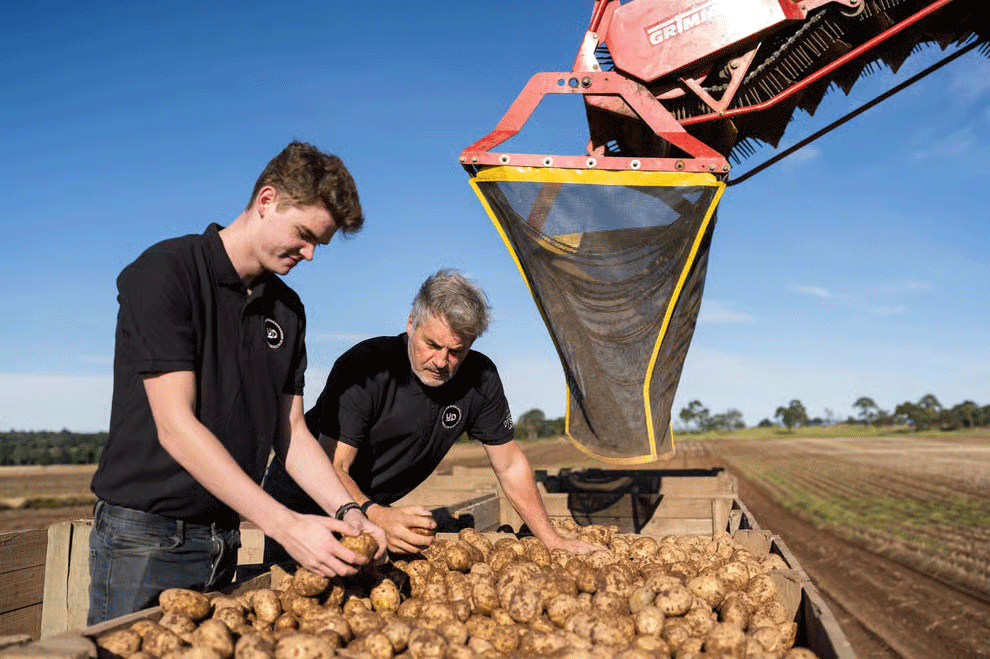
The anecdotal evidence from the 2025 Scottish potato harvest, as reported by Stirling Potatoes, presents a compelling case for a phenomenon well-known to agronomists: the inverse relationship between water availability and tuber quality. Andrew Stirling’s observation that dry conditions have yielded “the tastiest yet” potatoes, despite smaller sizing and increased bruising susceptibility, is rooted in plant physiology. The “warm, dry spell” he cites directly promotes the accumulation of dry matter—primarily starch and proteins—within the tuber. This higher concentration of solids is the key driver of a “fuller flavour” and a superior, fluffier texture upon cooking, as noted in products like Aldi’s Gastro Mashed Potatoes. This aligns with a 2023 study from the Journal of the Science of Food and Agriculture, which found that moderate water stress in the late tuber-bulking phase can increase dry matter content by up to 15%, directly correlating with improved sensory scores for mashed potatoes.
Beyond flavor, the 2025 season highlights the economic and supply chain implications of this quality shift. Stirling reports a good overall tonnage with a notable size redistribution: fewer large baking potatoes but strong yields in medium and salad varieties. This shift necessitates adaptive marketing and processing strategies. Graham Nicolson of Aldi Scotland underscores the importance of long-term partnerships with expert growers to navigate such seasonal variability. The industry challenge lies in balancing this quality boost with the real risks of drought. Research from the James Hutton Institute (2024) emphasizes that while controlled deficit irrigation can enhance quality, severe or prolonged drought stress can lead to unmarketable yields and exacerbate issues like common scab. Therefore, precision irrigation management that allows for strategic dry-down periods before harvest is becoming a critical tool for growers aiming to optimize both flavor and yield.
The 2025 Scottish potato harvest serves as a potent real-world example of how environmental stressors can be leveraged for product differentiation. For farmers, agronomists, and engineers, the key takeaway is that managing for quality, not just yield, can open premium market opportunities. The scientific consensus confirms that strategic water management, particularly during late-season growth, is instrumental in enhancing dry matter content and sensory attributes. Embracing this nuanced understanding allows the agricultural sector to transform the challenge of unpredictable weather into a competitive advantage, delivering a superior product that meets evolving consumer demands for taste and texture.

