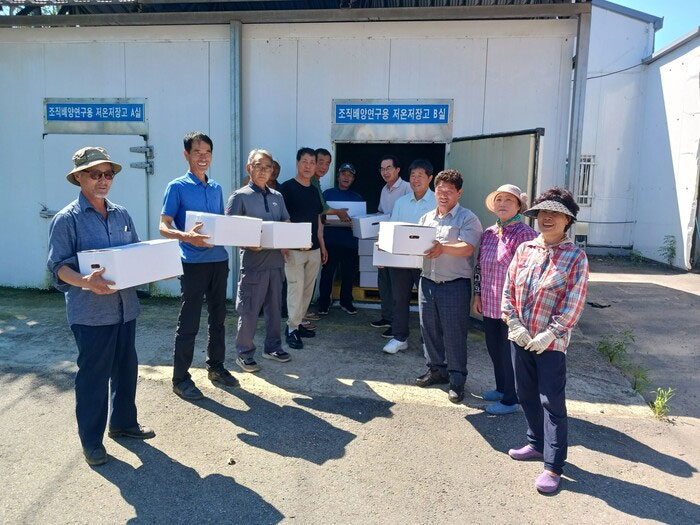
Wanju County is taking a proactive, science-driven approach to securing potato yields and farmer livelihoods by distributing 1,530 kg of certified virus-free seed potatoes to its leading growers and potato research associations. The distributed stock includes eight varieties, with a focus on the popular ‘Chubaek’—a short-dormancy variety ideal for autumn cultivation due to its 90-day growth cycle. This program is central to the county’s strategy for enhancing crop quality and productivity.
The core of this initiative is the Wanju County Agricultural Technology Center’s use of advanced tissue culture (in vitro) propagation and soilless cultivation (hydroponics and substrate culture) to produce clean seed year-round. This method is crucial because potatoes, as vegetative propagated crops, are highly susceptible to the accumulation of viruses, viroids, and other pathogens when conventional seed tubers are reused over seasons. This phenomenon, known as “seed degeneration,” can lead to catastrophic yield reductions of up to 90% over time, as highlighted in the provided text. The farmer testimonial—reporting more uniform sprouting, fewer diseases, and an expected 20-30% yield increase—provides immediate, on-the-ground validation of this scientific approach.
This local effort reflects a critical global challenge. According to a 2023 report by the International Potato Center (CIP), viral diseases are among the most significant constraints to potato production worldwide, costing farmers an estimated $10 billion annually in lost revenue. The report emphasizes that the foundation of any effective integrated pest management (IPM) strategy is, unequivocally, the use of certified clean seed. Wanju’s program directly addresses this by using tissue culture to eliminate pathogens at the source, creating a healthy foundation for the seed multiplication chain.
Wanju County’s distribution of virus-free seed potatoes is more than a seasonal subsidy; it is a strategic investment in the foundational element of sustainable potato production. For agronomists and farmers, this case underscores a critical equation: higher upfront investment in clean seed technology directly translates to significantly higher yields, improved crop health, and greater long-term profitability. It serves as a powerful model for other regions, demonstrating that combating yield-robbing viruses begins not in the field, but in the laboratory, with a commitment to sophisticated seed systems that break the cycle of degeneration.

